
2. Product Information
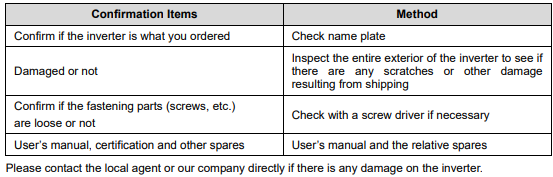
2.1 Product Inspection
Checking the following items when receiving the inverter
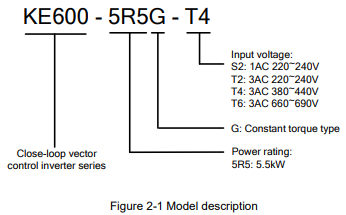
2.2 Model Description
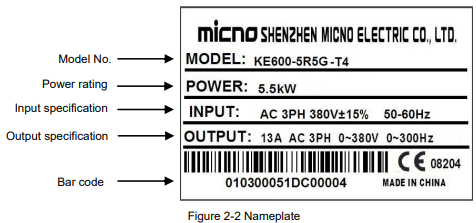
2.3 Description of Nameplate
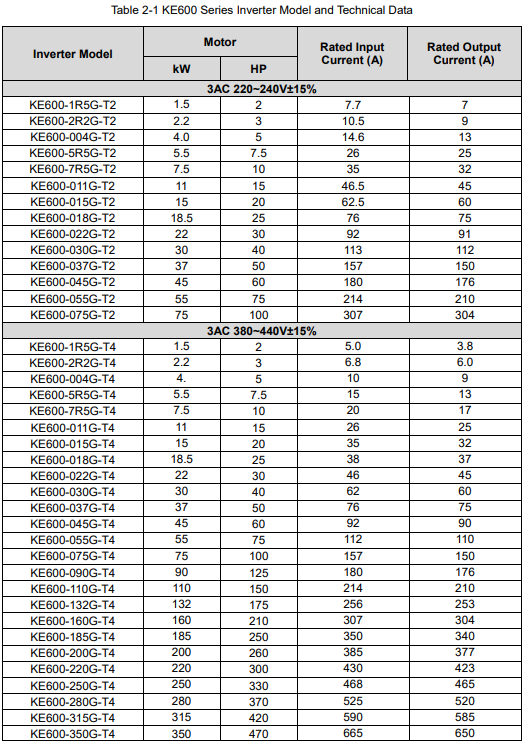
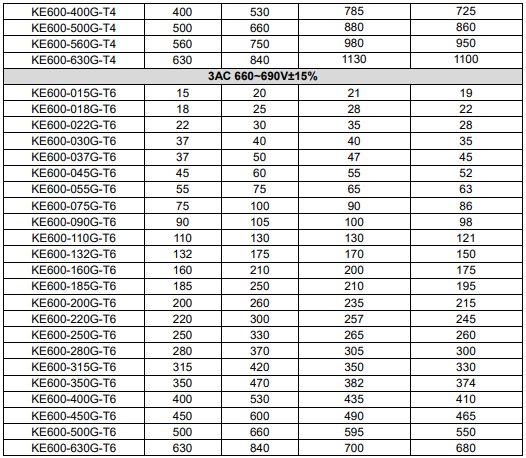
2.4 Selection Guide
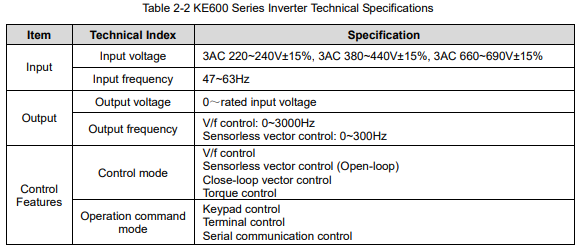
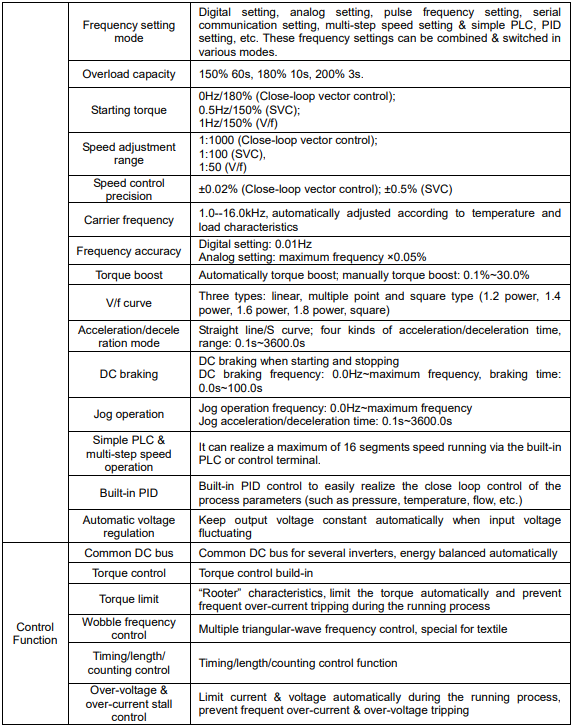
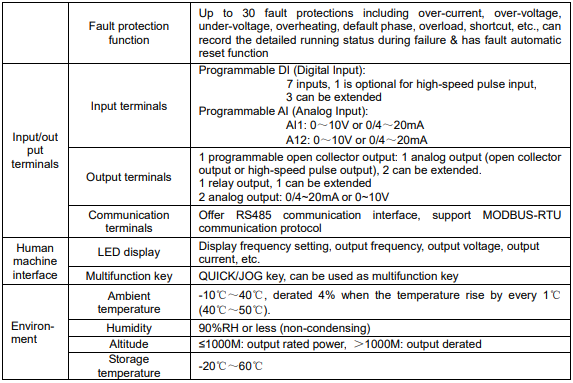
2.5 Technical Specifications
2.6 External & Installation Dimensions
2.6.1 Parts Description
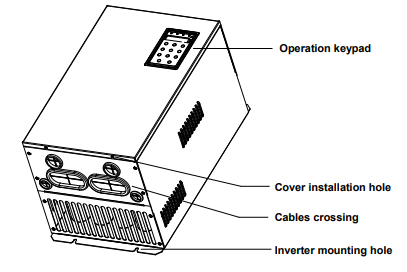
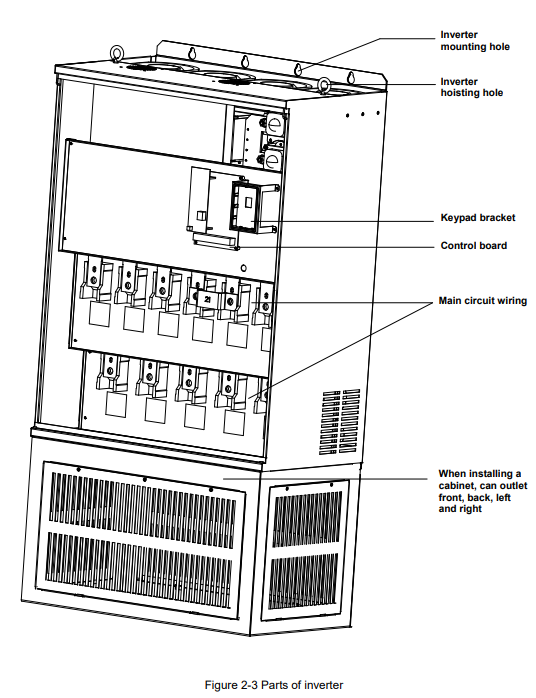
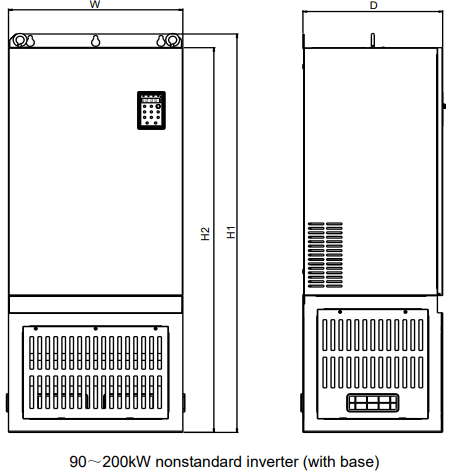
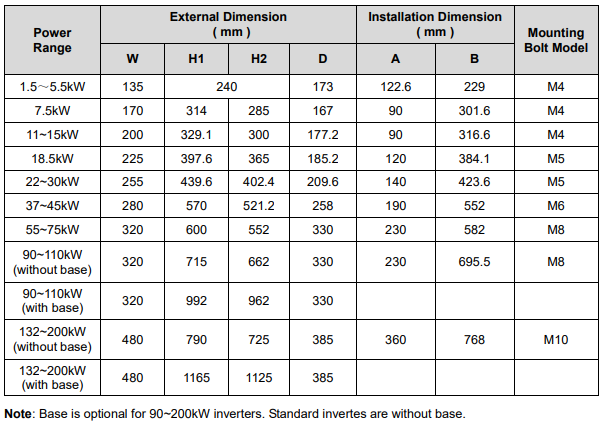
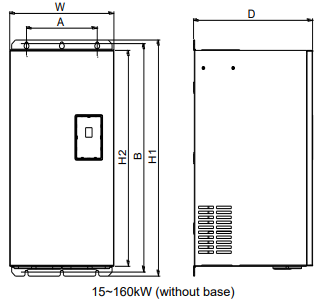
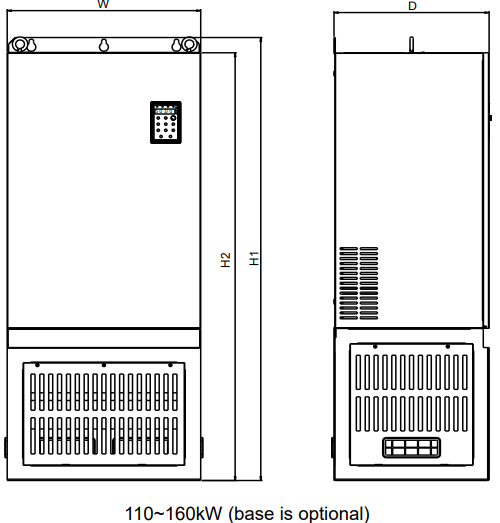
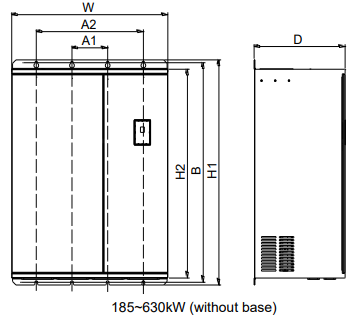
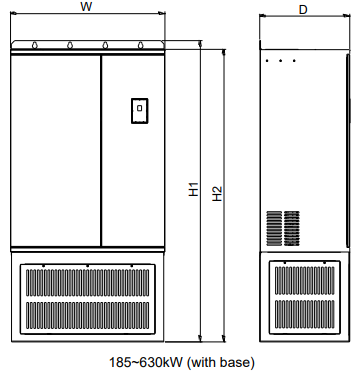
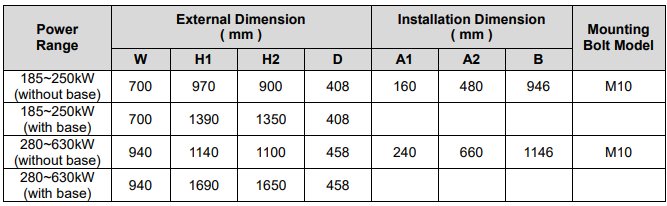
2.6.2 External & Installation Dimensions
3AC 220~240V inverter dimension
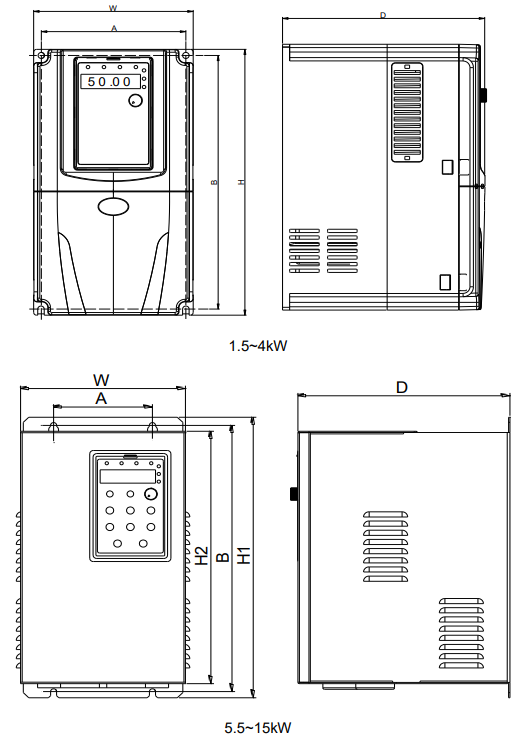
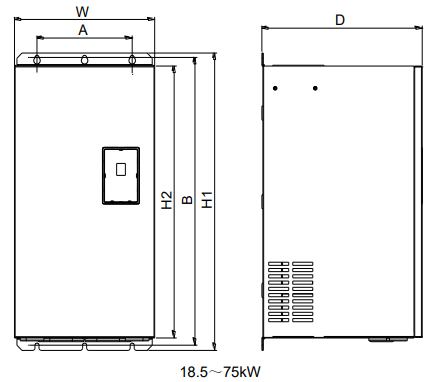
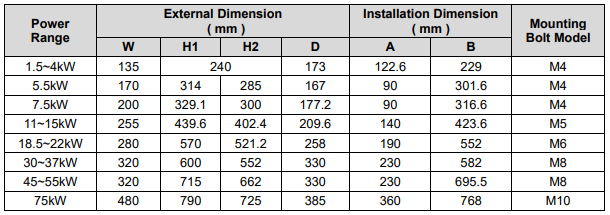
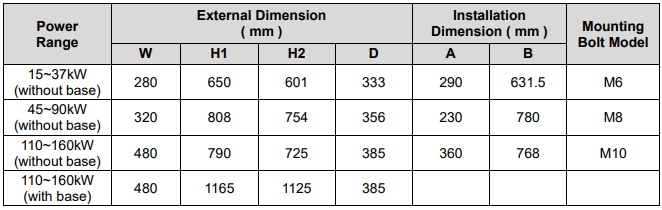
3AC 380~440V inverter dimension
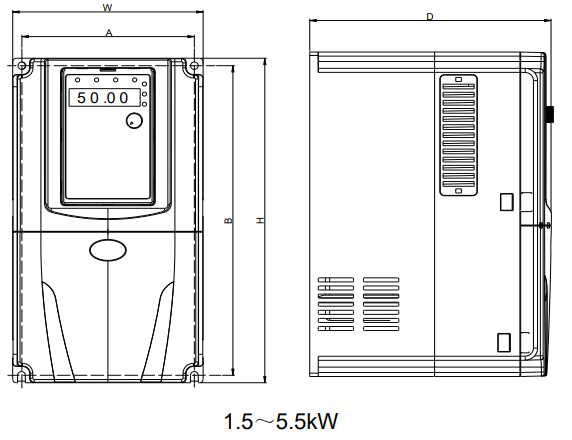
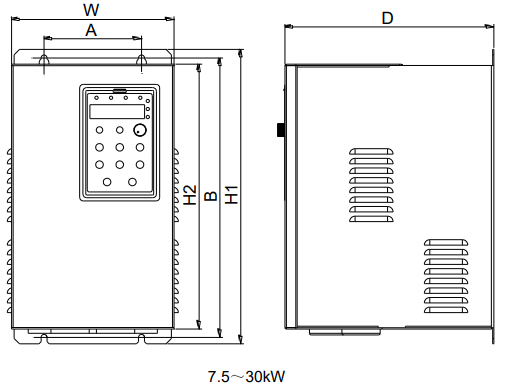
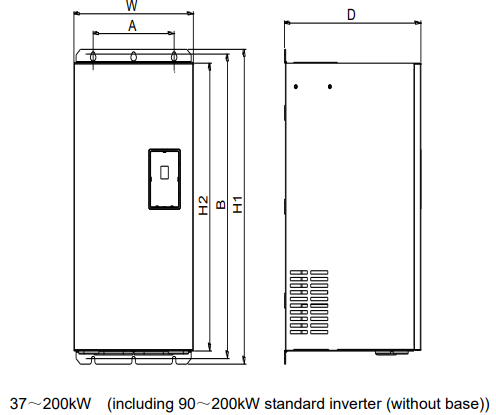
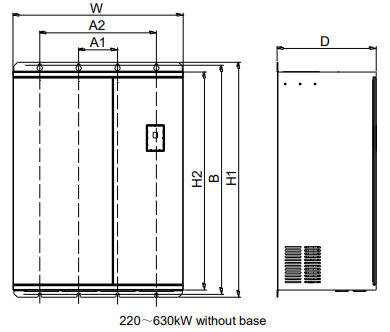
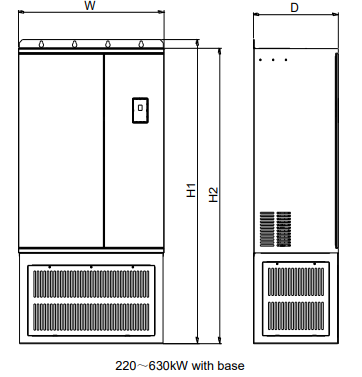
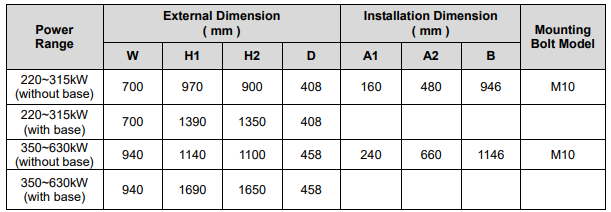
3AC 660~690V Inverter Dimension
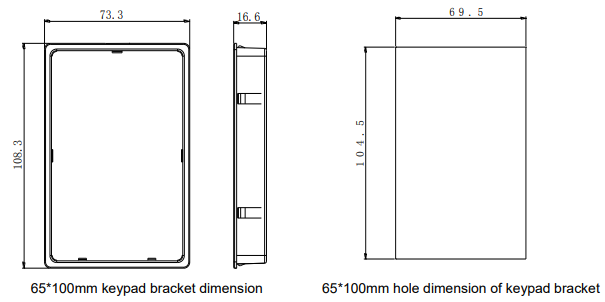
2.6.3 Keypad External Dimension
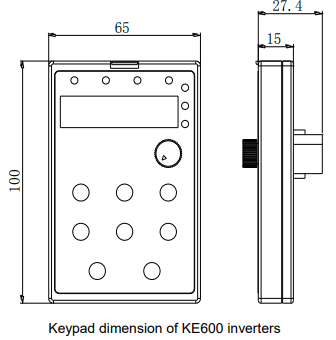
Illustration: This keypad can be connected with the inverter externally by ordinary network cable, and it needs an additional bracket to fix it.
2.7 Routine Maintenance of Inverter
2.7.1 Routine Maintenance
The influence of the ambient temperature, humidity, dust and vibration will cause the aging of the devices in the inverter, which may cause potential fault of the inverter or reduce the service life of the inverter.
Therefore, it is necessary to carry out routine and periodical maintenance on the inverter.
Routine inspection Items include:
1) Whether there is any abnormal change in the running sound of the motor;
2) Whether the motor has vibration during the running;
3) Whether there is any change to the installation environment of the inverter;
4) Whether the inverter cooling fan works normally;
5) Whether the inverter has over temperature.
Routine cleaning:
1) The inverter should be kept clean all the time.
2) The dust on the surface of the inverter should be effectively removed, so as to prevent the dust entering the inverter. Especially the metal dust is not allowed.
3) The oil stain on the inverter cooling fan should be effectively removed.
2.7.2 Periodic Inspection
Please perform periodic inspection on the places where the inspection is a difficult thing.
Periodic inspection Items include:
1) Check and clean the air duct periodically;
2) Check if the screws are loose;
3) Check if the inverter is corroded;
4) Check if the wire connector has arc signs;
5) Main circuit insulation test.
Remainder: When using the megameter (DC 500V megameter recommended) to measure the insulating resistance, the main circuit should be disconnected with the inverter. Do not use the insulating resistance meter to test the insulation of control circuit. It is not necessary to conduct the high voltage test (which has been completed upon delivery).
2.7.3 Replacement of Vulnerable Parts for Inverter
The vulnerable parts of the inverter include cooling fan and filter electrolytic capacitor, whose service life depends on the operating environment and maintenance status. General service life is shown as follows:
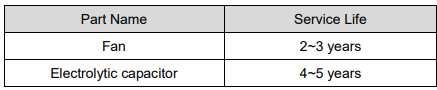
The user can determine the year of replacement according to the operating time.
1) Cooling fan
Possible reason for damage: Bearing is worn and blade is aging.
Judging criteria: Whether there is crack on the blade and whether there is abnormal vibration noise upon startup.
2) Filter electrolytic capacitor
Possible reason for damage: Input power supply in poor quality, high ambient temperature, frequent load jumping, and electrolyte aging.
Judging criteria: Whether there is liquid leakage and whether the safe valve has projected, and measure the static capacitance, and the insulating resistance.
2.7.4 Storage of Inverter
Upon acquiring the inverter, the user should pay attention to the following points regarding the temporary and long-term storage of the inverter:
1) Pack the inverter with original package and place back into the packing box of our company.
2) Long-term storage will degrade the electrolytic capacitor. Thus, the product should be powered up once every 2 years, each time lasting at least five hours. The input voltage should be increased slowly to the rated value with the regulator.
2.8 Instructions on Warranty of Inverter
Free warranty only applies to the inverter itself.
1) MICNO provides 18 month warranty (starting from the date of original shipment as indicated on the barcode) for the failure or damage under normal use conditions. If the equipment has been used for over 18 months, reasonable repair expenses will be charged.
2) Reasonable repair expenses will be charged for the following situations within 18 months:
a) The equipment is damaged because the user fails to comply with the requirements of the user’s manual;
b) Damage caused by fire, flood and abnormal voltage;
3) Damage caused when the inverter is used for abnormal function.
The service expenses will be calculated according to the standard of the manufacturer. If there is any agreement, the agreement should prevail.
No comments to display
No comments to display