
APPENDIX B: AMPLIFIER AND RELATED OBJECTS
This appendix details the amplifier object and other objects related to amplifier settings and status.
Note: Unless otherwise stated, all properties described in this appendix have read/write access. All methods return an HRESULT. In the event of an error, CMO reports the error in the form of COMcompatible error objects. See Error Handling
B.1: AmpSettingsObj
B.1.1: Overview
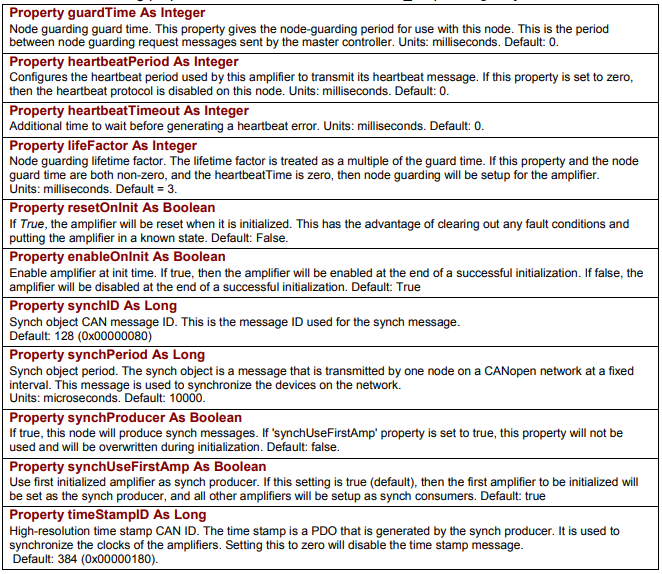
AmpSettingsObj contains information about the amplifier’s CANopen settings. All of the properties have both read and write access. The Amplifier Settings Object is used in the InitializeExt method of the Amplifier Object to customize the amplifier’s CANopen settings.
The basic steps for using the AmpSettingsObj are:
1 Declare an AmpSettingsObj.
2 Create a new instance of it.
3 Change one or more properties of the AmpSettingsObj.
4 Call AmpObj’s InitializeExt method and pass AmpSettingsObj as one of the parameters. See
InitializeExt.
B.1.2: AmpSettingsObj Methods and Properties
Each of the following properties is a member of CMLCOMLib_AmpSettingsObj
B.2: Amplifier Initialization
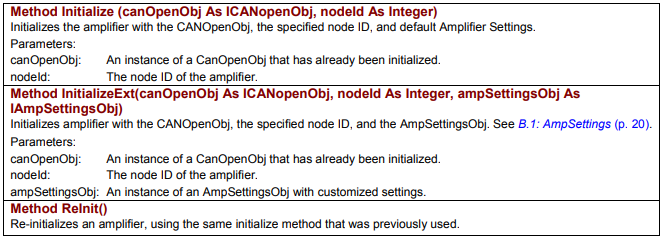
Each of these amplifier initialization methods is a member of CMLCOMLib.AmpObj.
B.3: Amplifier Information
B.3.1: Amplifier Information-Related Amplifier Object Properties
The following amplifier property is a member of CMLCOMLib.AmpObj.
Property AmpInfo As CMLCOMLib.AmpInfoObj
Read-only. Contains the AmpInfoObj. See Objects Contained by AmpObj (p. 12) and B.3.2 AmpInfoObj, below
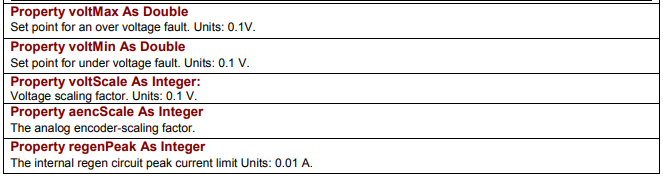
B.3.2 AmpInfoObj
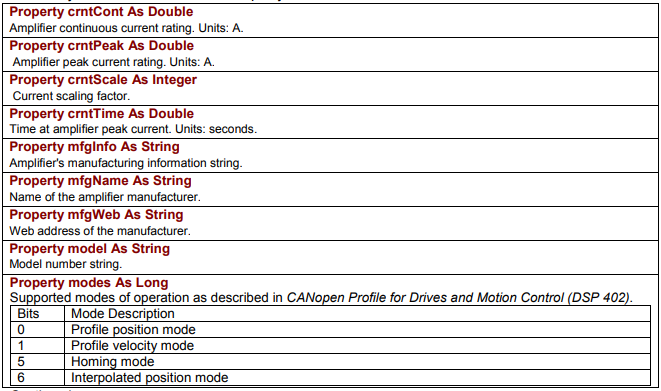
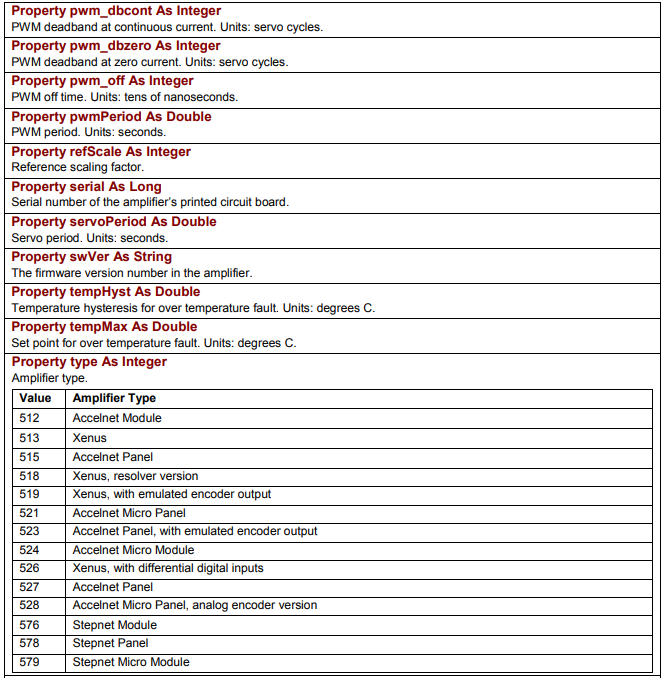
Each of the following Read-Only properties is a member of CMLCOMLib.AmpInfoObj. An instance of this object is obtained from the AmpObj.

B.4: Motor/Feedback Information
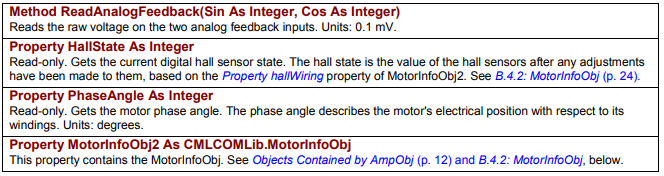
B.4.1: Motor/Feedback-Related Amplifier Object Methods and properties
Each of the following motor/feedback methods and properties is a member of CMLCOMLib.AmpObj.
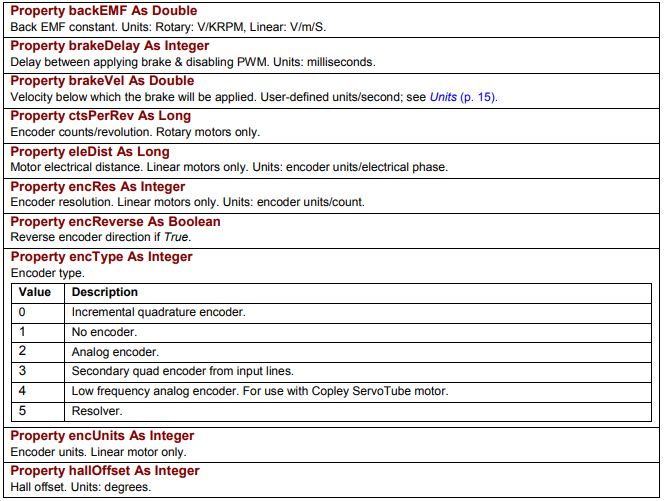
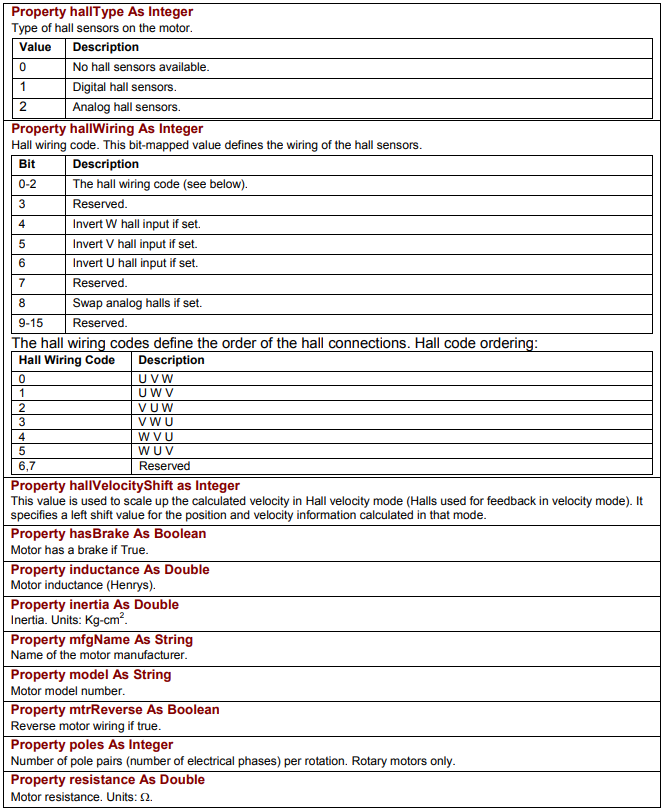
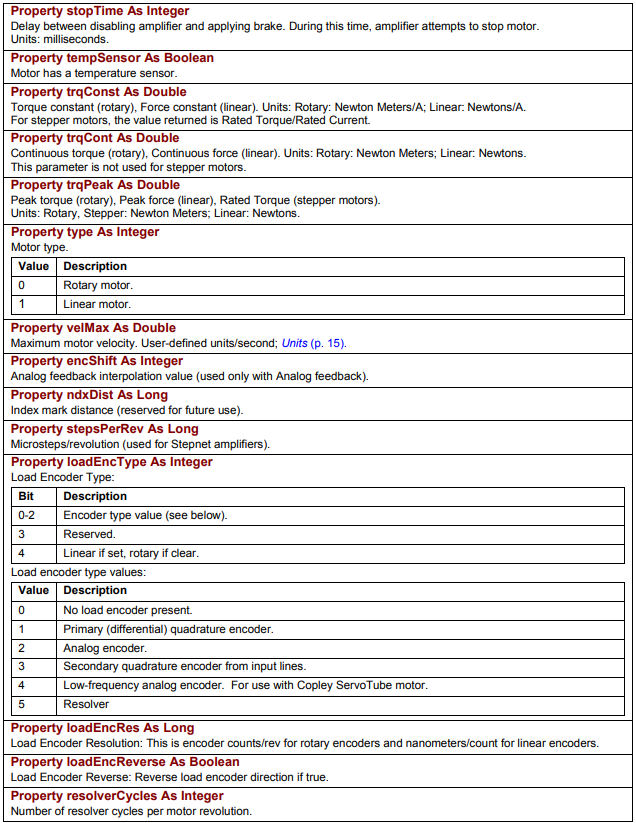
B.4.2: MotorInfoObj2
Each of the following Motor/Feedback properties is a member of CMLCOMLib.MotorInfoObj2. An
instance of this object is obtained from the AmpObj.
B.5: Save/Restore Amplifier Data
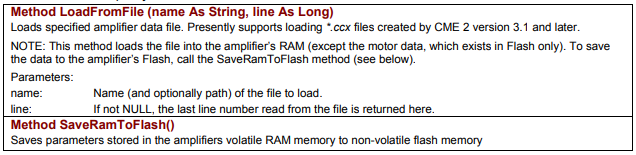
The following methods are used to save and restore amplifier data. They are members of CMLCOMLib.AmpObj
B.6: Node Guarding
The following methods, members of CMLCOMLib.AmpObj, are used to control node guarding.

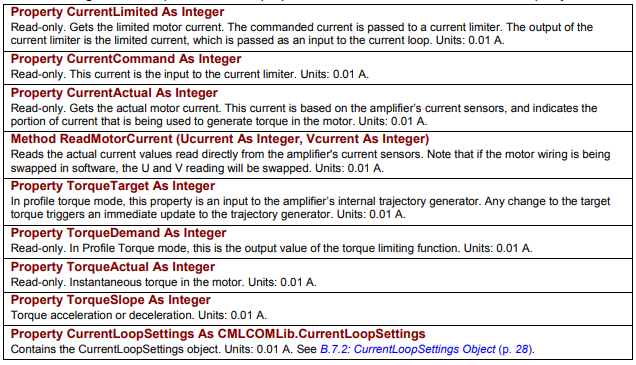
B.7: Current Loop
B.7.1: Current Loop-Related Amplifier Object Properties
The following current loop methods and properties are members of CMLCOMLib.AmpObj.
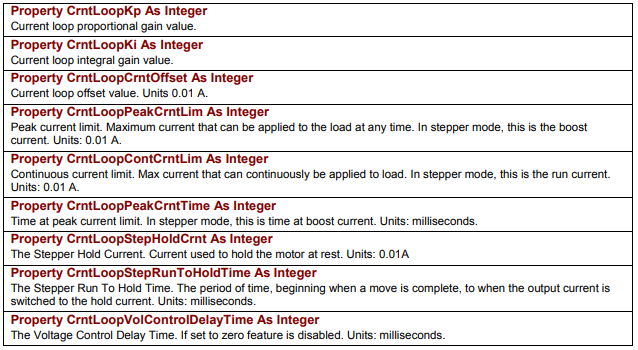
B.7.2: CurrentLoopSettings Object
The following current loop properties are members of CMLCOMLib. CurrentLoopSettings. An instance of this object is obtained from the AmpObj.
B.8: Velocity Loop
B.8.1: Velocity Loop-Related Amplifier Object Properties
The following velocity loop properties are members of CMLCOMLib.CML_AmpInfo.
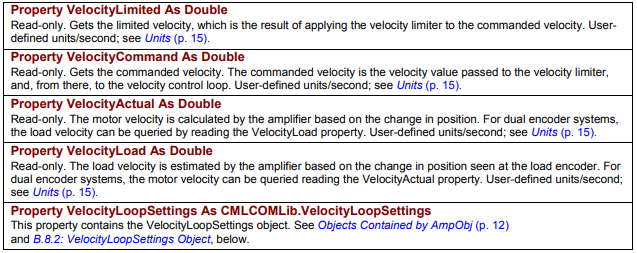
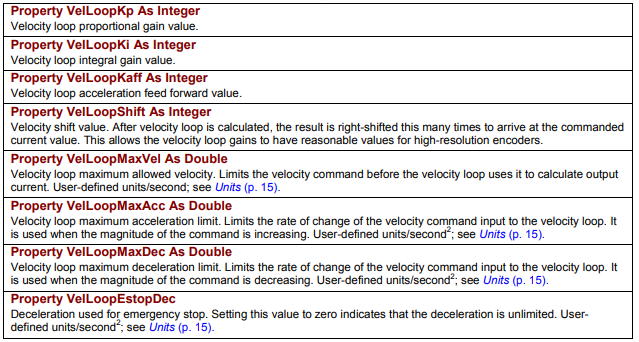
B.8.2: VelocityLoopSettings Object
The following velocity loop properties are members of CMLCOMLib. VelocityLoopSettings. An instance of this object is obtained from the AmpObj.
B.9: Position Loop
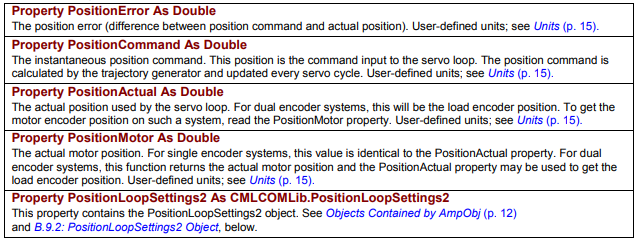
B.9.1: Position Loop-Related Amplifier Object Properties
The following position loop properties are members of CMLCOMLib AmpObj.
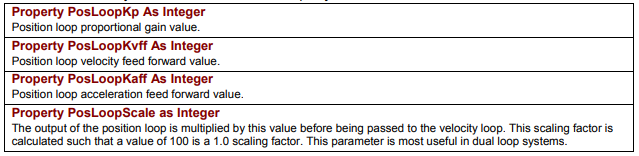
B.9.2: PositionLoopSettings2 Object
The following position loop properties are members of CMLCOMLib. PositionLoopSettings2. An instance of this object is obtained from the AmpObj.
B.10: Tracking Windows
B.10.1: Tracking Windows - Related Amplifier Object Properties
The following amplifier property is a member of CMLCOMLib.AmpObj.
Property TrackingWindows As CMLCOMLib.TrackingWindows
This property contains the TrackingWindows object. See Objects Contained by AmpObj and B.10.2 TackingWindows Object, below.
B.10.2 TackingWindows Object
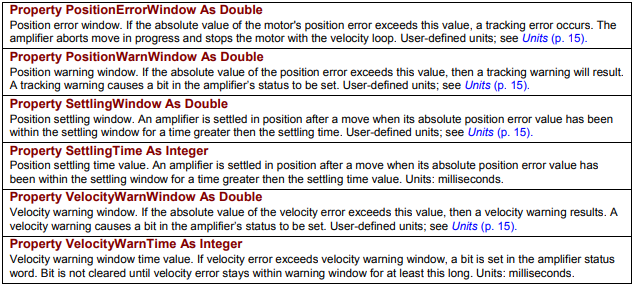
Each of the following Amplifier Settings is a member of CMLCOMLib.TrackingWindows. An instance of this object is obtained from the AmpObj.
B.11: Status, Events, and Faults
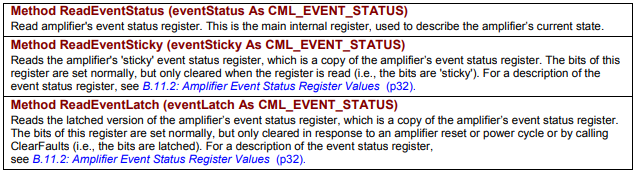
Amplifier status and fault information can be accessed using the following methods and properties of CMLCOMLib.AmpObj.
B.11.1: Amplifier Status Register Methods
These methods read the amplifier’s status registers (CML_EVENT_STATUS).
B.11.2: Amplifier Event Status Register Values
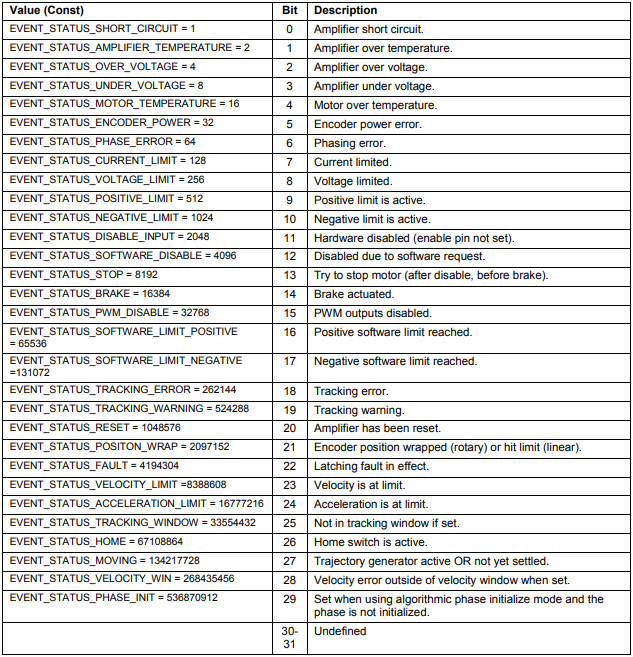
Bits in the Event Status register describes various amplifier status conditions, as described below.
B.11.3: Amplifier Event Register Methods
The following member of CMLCOMLib.AmpObj is used to read the amplifier’s event register
Method ReadEventMask (eventMask As CML_AMP_EVENT)
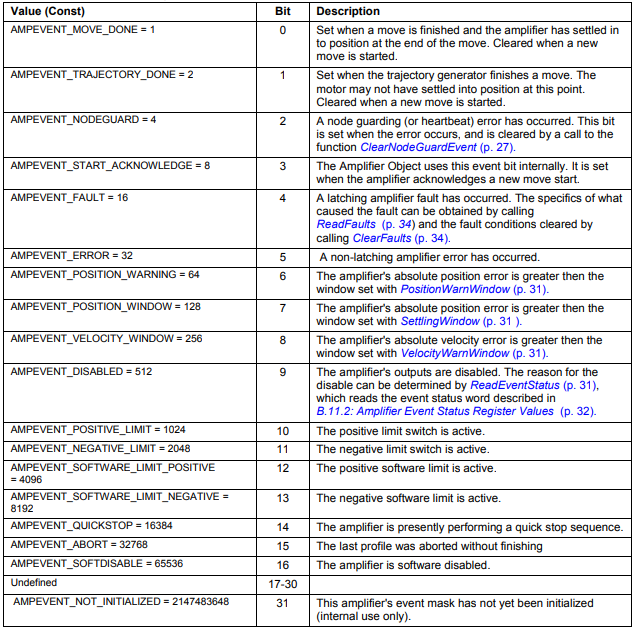
Reads the current state of the amplifier’s event register. The event mask is a bit-mapped variable that describes the state of the amplifier. The contents of this variable are built up from several different amplifier status words. For a description of masking, see G.1: Masking. Event values are described below.
B.11.4: Amplifier Event Register Values
Bits in the Amp Event register describes various amplifier states, as described below.
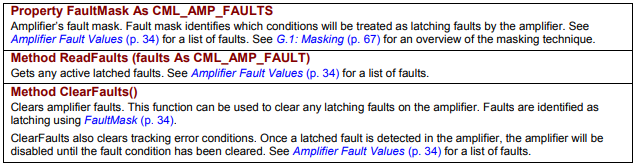
B.11.5: Amplifier Faults Methods and Properties
These methods and properties, members of CMLCOMLib.AmpObj, are associated with amplifier faults.
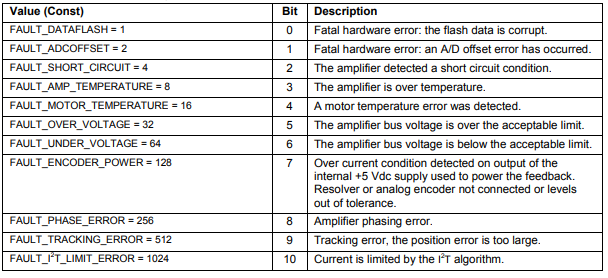
B.11.6: Amplifier Fault Values
Bits in the Amp Faults register describes various amplifier faults, as described below
B.12: Amplifier Digital Inputs/Outputs
Amplifier digital inputs/outputs are managed by these CMLCOMLib.AmpObj properties/methods.
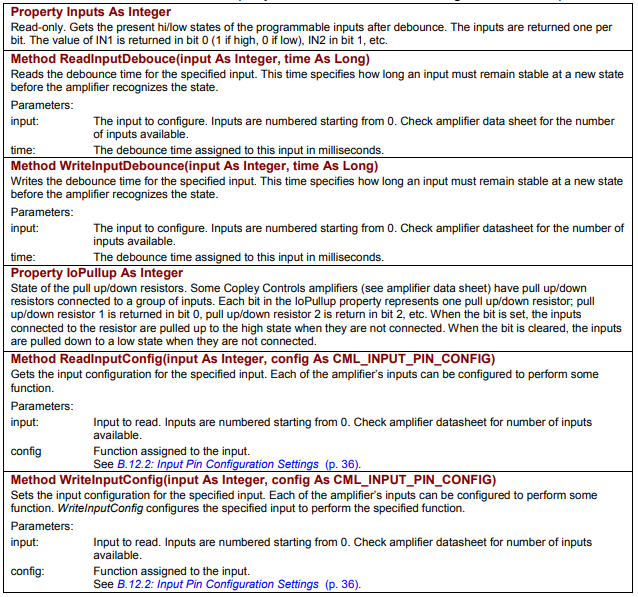
B.12.1: Input Pin Methods
Each of the amplifier’s digital inputs can be configured to perform an action. Note that one input can perform the same action as another (for instance, two hardware disable inputs). The methods below, members of CMLCOMLib.AmpObj, relate to the states and configuration of the inputs.
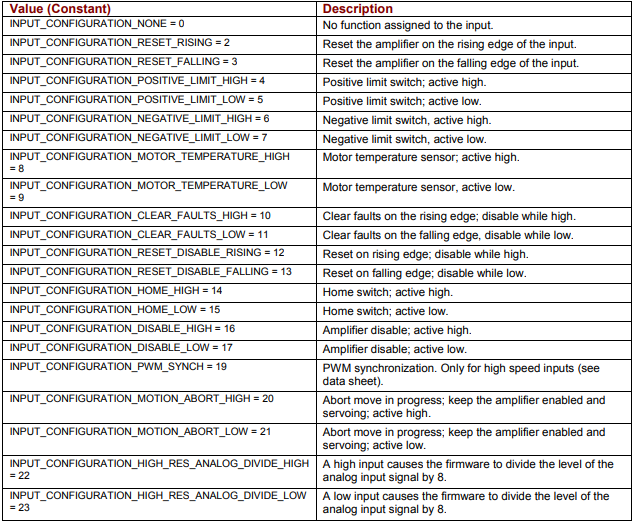
B.12.2: Input Pin Configuration Settings
The following values describe input pin configurations.
They can be read with ReadInputConfig and changed with WriteInputConfig.
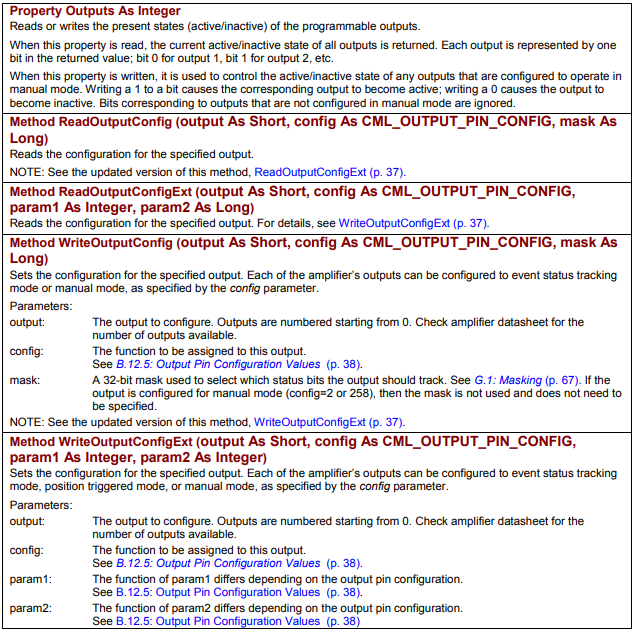
B.12.3: Output Pin Methods
Each of the amplifier’s digital outputs can be configured to go active/inactive under different conditions. The methods and properties below, members of CMLCOMLib.AmpObj, relate to the states and configuration of the outputs.
B.12.5: Output Pin Configuration Values
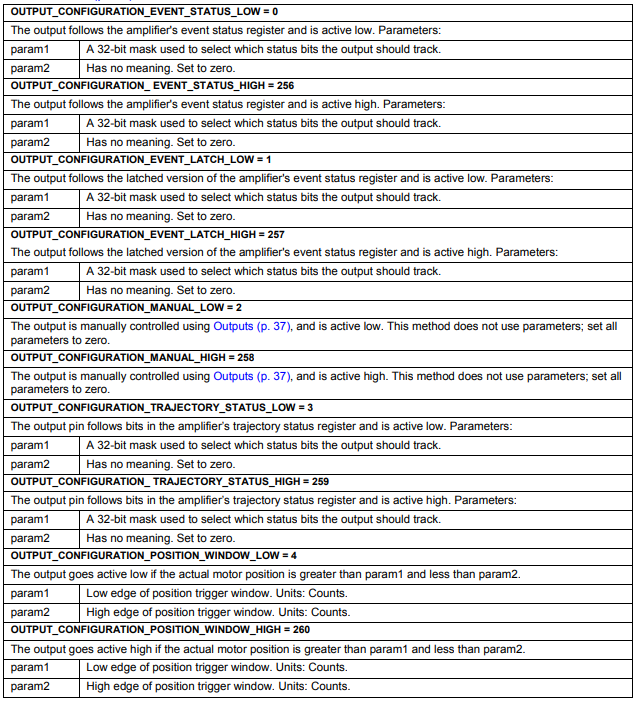
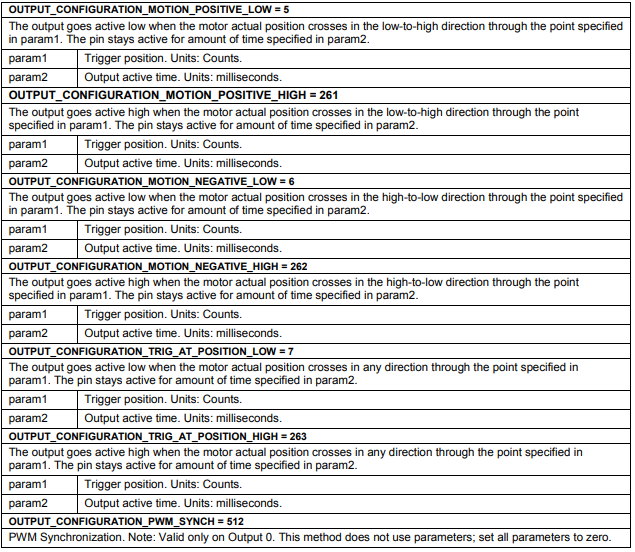
Each value described below specifies an output pin function, and whether the output will be active high or active low. These values are set and read using the methods described in B.12.3: Output Pin Methods.
B.13: Amplifier Enable/Disable
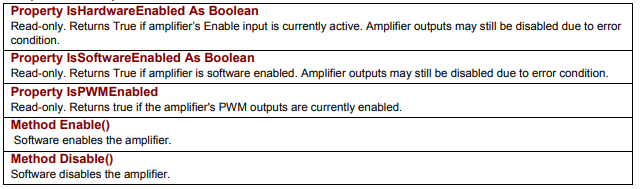
The following methods and properties of the AmpObj object are used to enable and disable the amplifier, and report on its state.
B.14: Homing
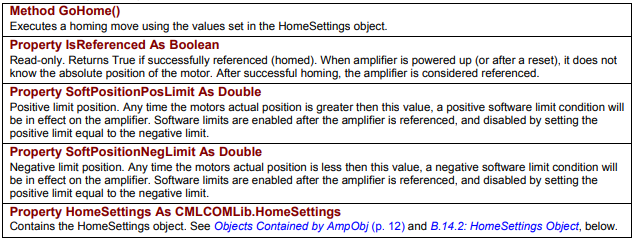
B.14.1: Homing-Related Amplifier Object Methods and Properties
The following homing methods and properties are members of CMLCOMLib.AmpObj
B.14.2: HomeSettings Object Properties
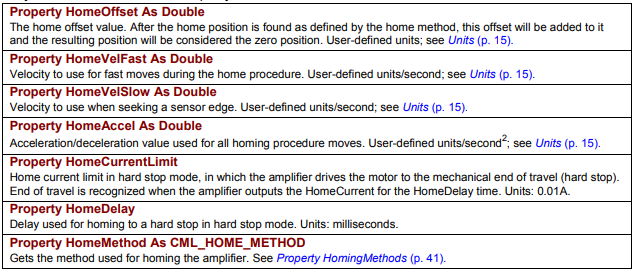
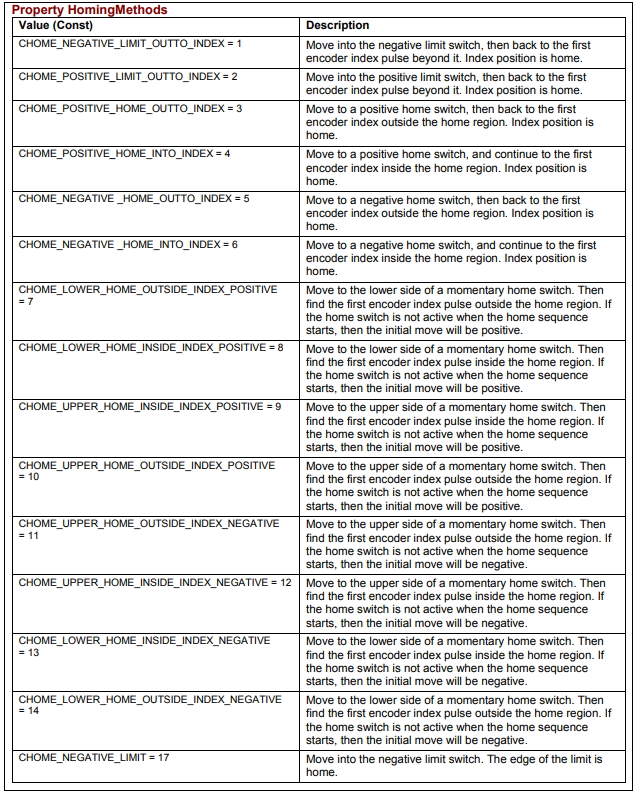
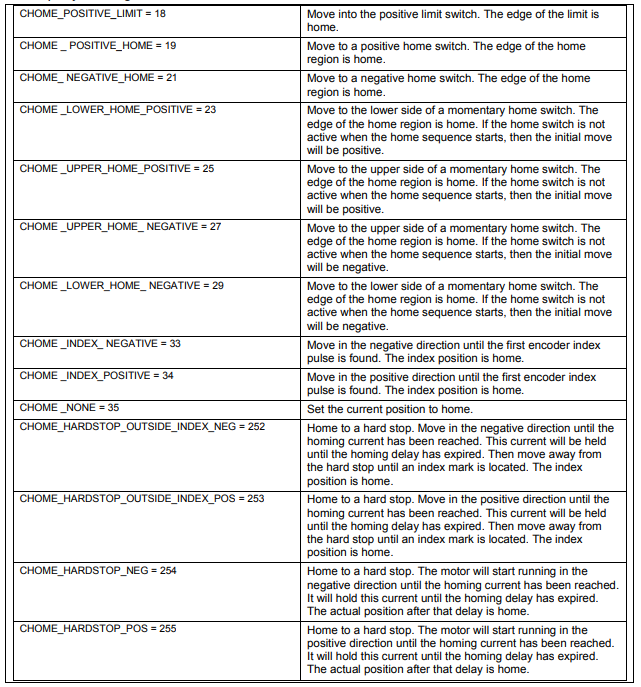
The following homing properties are members of CMLCOMLib.HomeSettings. An instance of this object is obtained from the AmpObj.
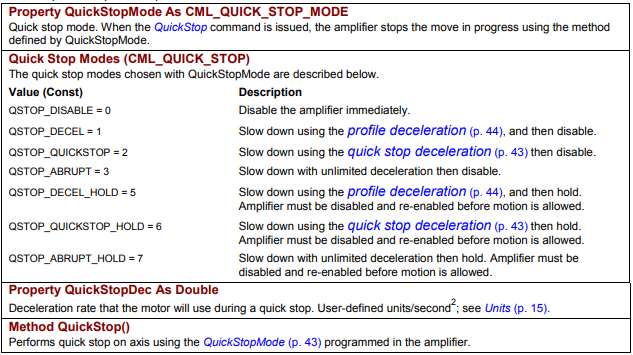
B.15: Quick Stop
Quick stops are controlled using these methods and properties of the CMLCOMLib.AmpObj object.
B.15.1: Quick Stop
The following properties and methods, members of CMLCOMLib.AmpObj, are used to configure
the amplifier’s quick stop action.
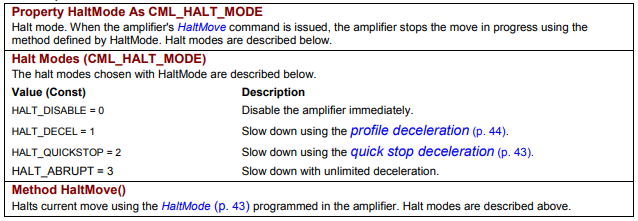
B.15.2: Halt
The following properties and methods, members of CMLCOMLib.AmpObj, are used to configure the amplifier’s halt action.
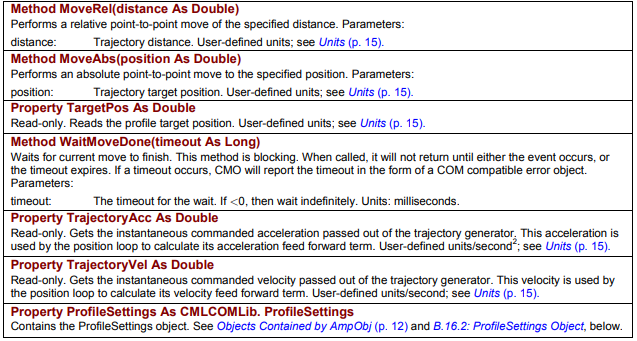
B.16: Point-to-Point Moves
B.16.1: Point-to-Point Move-Related Amplifier Methods and Properties
The following methods and properties, members of CMLCOMLib.AmpObj, can be used to control
point-to-point moves
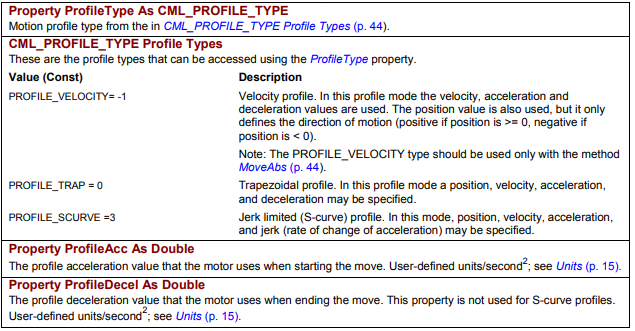
B.16.2: ProfileSettings Object
The following point-to-point move properties are members of CMLCOMLib.ProfileSettings. An instance of this object is obtained from the AmpObj.

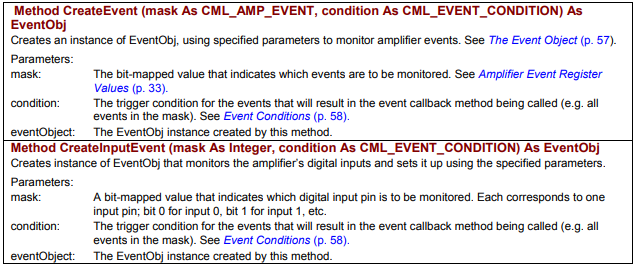
B.17: Amplifier Events
The following methods, members of CMLCOMLib.AmpObj, are used to monitor amplifier events and amplifier inputs.
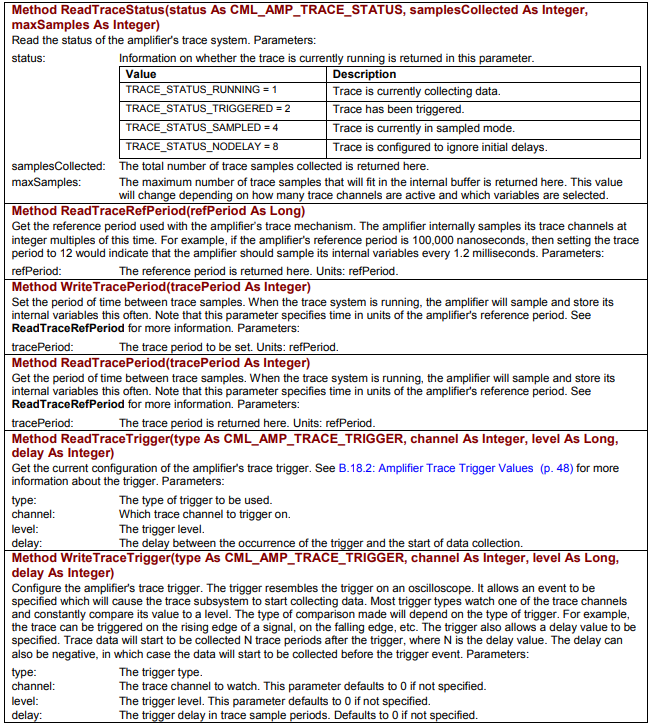
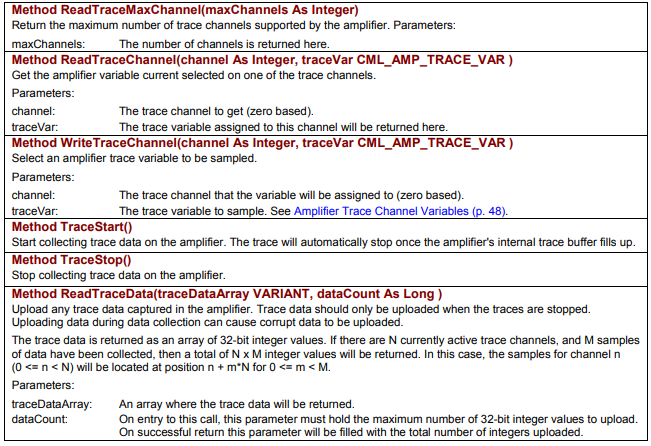
B.18: Amplifier Trace Methods and Properties
The following methods are used to configure and monitor the amplifier trace function.
B.18.1: Amplifier Trace Methods
The following amplifier trace methods are members of CMLCOMLib.AmpObj
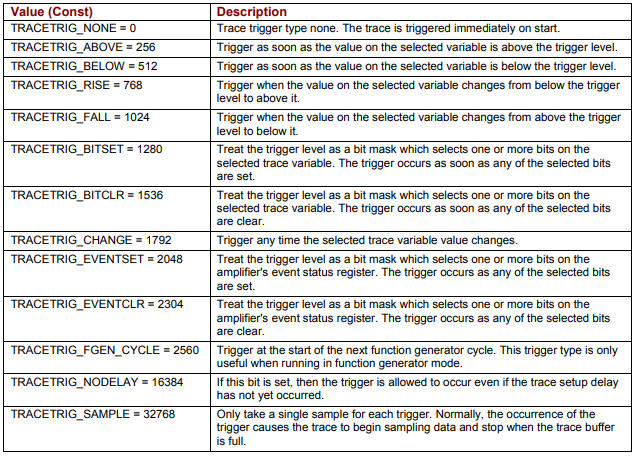
B.18.2: Amplifier Trace Trigger Values
The method WriteTraceTrigger (p. 46) can be used to configure the trace trigger by selecting one of the values below. The method ReadTraceTrigger (p. 46) can be used to read the current trigger value.
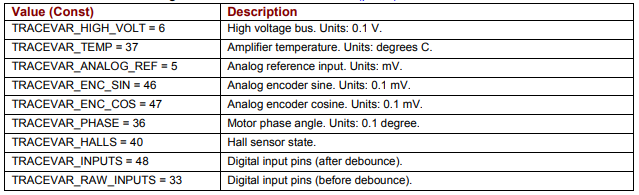
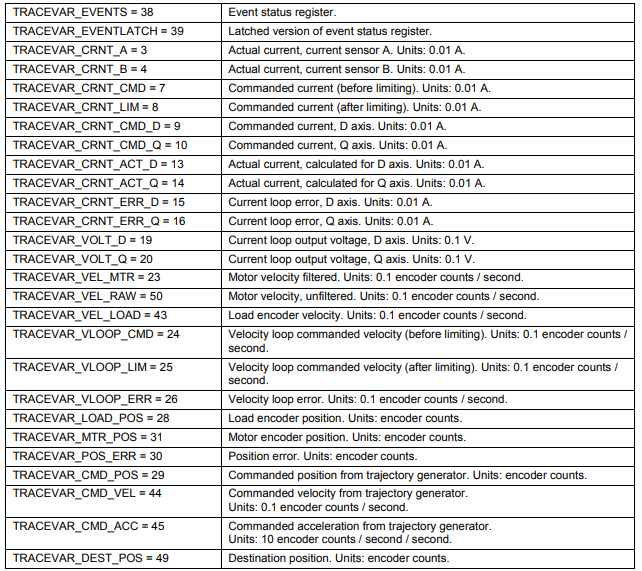
B.18.3: Amplifier Trace Channel Variables
Following is the list of amplifier variables that can be monitored using the trace feature. A variable can be assigned to a channel using method WriteTraceChannel. A channel’s assigned variable can be read using method ReadTraceChannel.
B.19: Other Methods and Properties
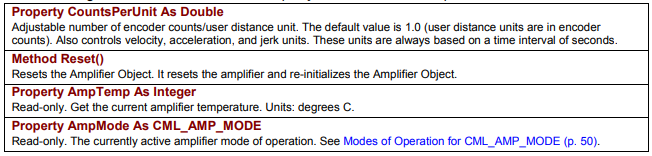
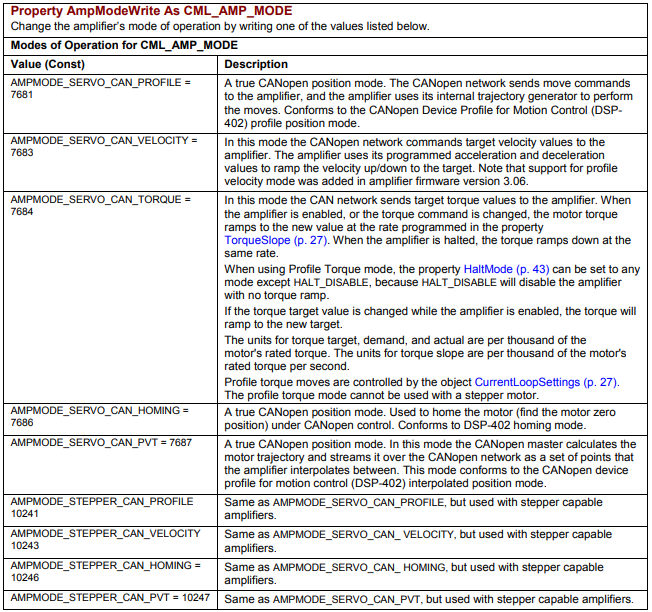
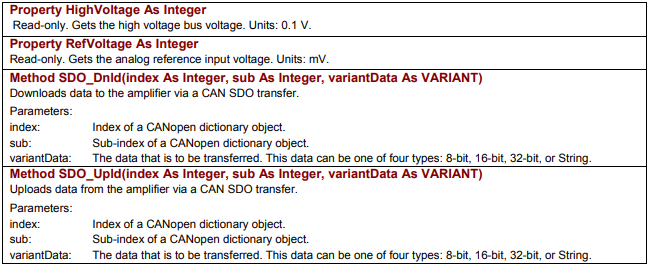
The following members of CMLCOMLib.AmpObj relate to various amplifier functions.
No comments to display
No comments to display