
1.TRANSPORTATION AND INSTALLATION

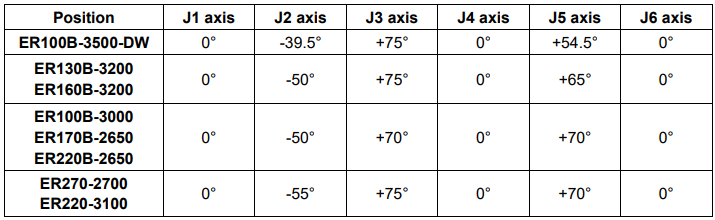
Turn each axis to transportation gesture before move the robot and be sure to keep the gesture during transportation until it be properly installed and mounted. Transportation gesture of each axis is shown below. Perform the transportation properly, or it may result in personnel injury or equipment damage.
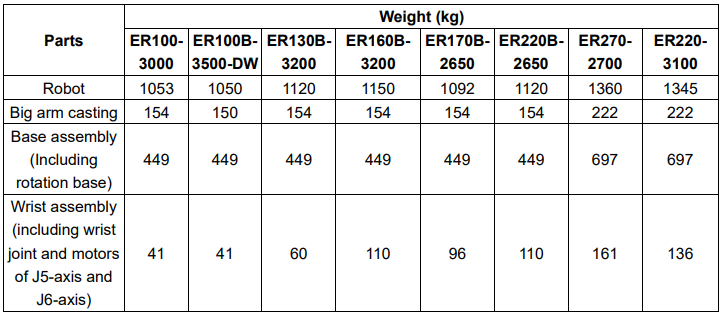
Refer to theoretical weight of main parts shown below to install, disassemble and transport the robot.

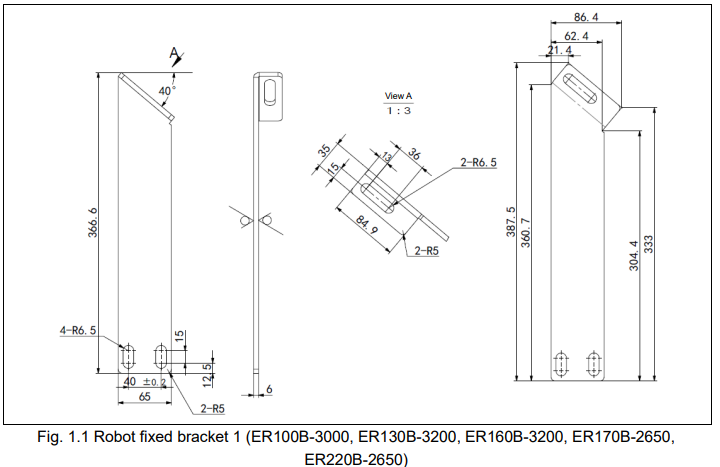
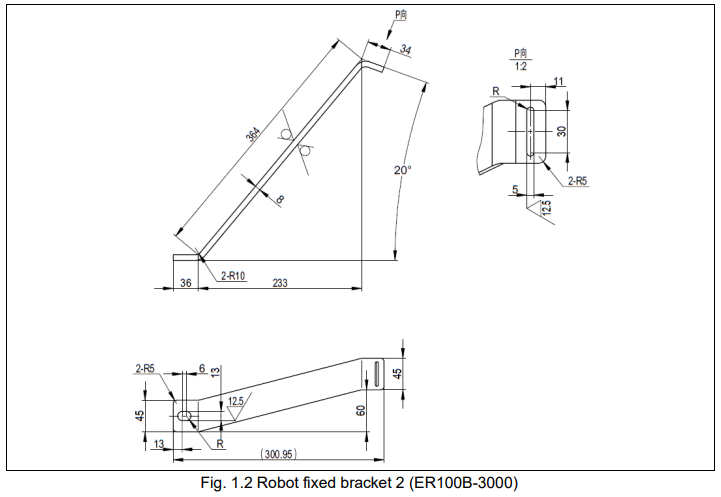
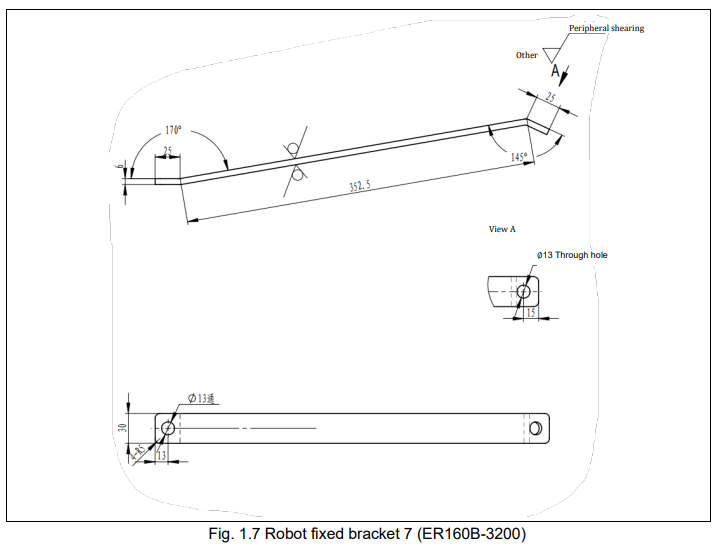
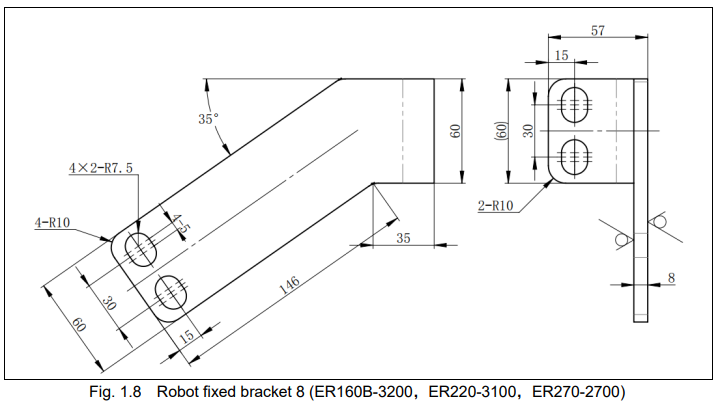
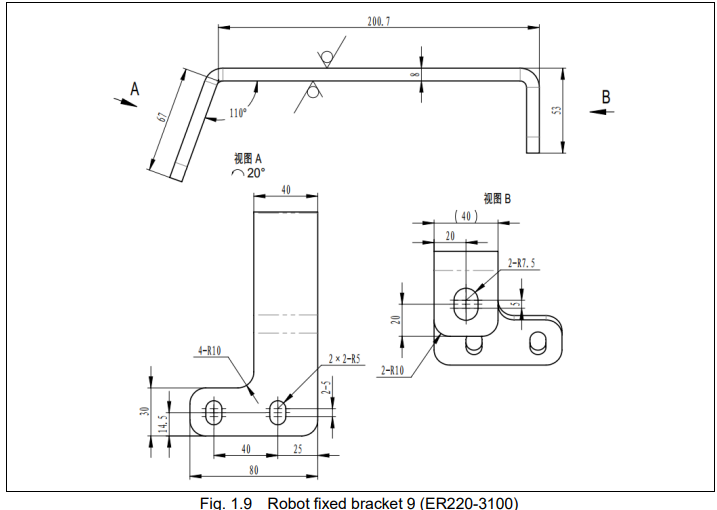
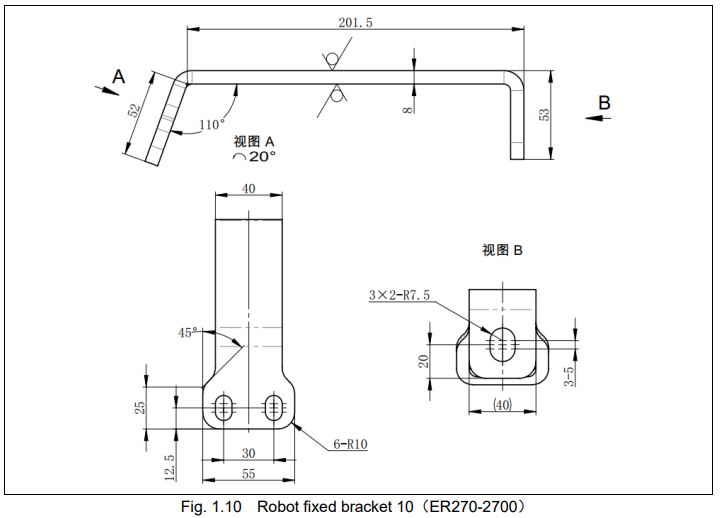
Fixed bracket should be mounted before transport the robot and be removed before install the robot. Refer to the following figures when remove the bolts on fixed bracket.
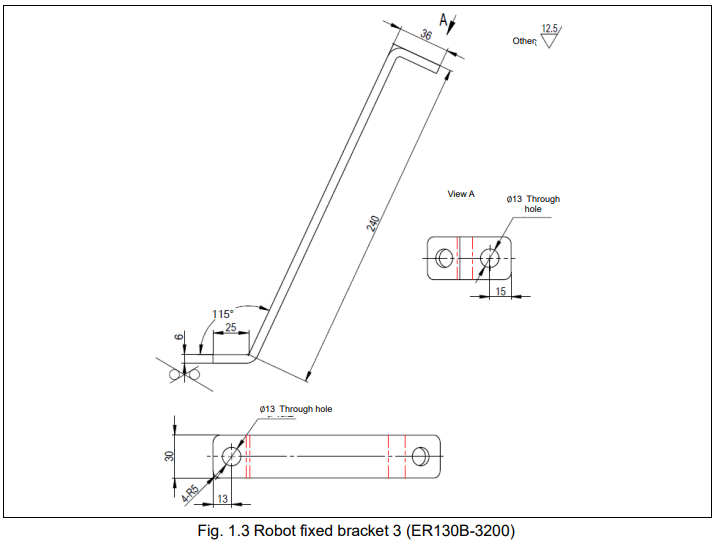
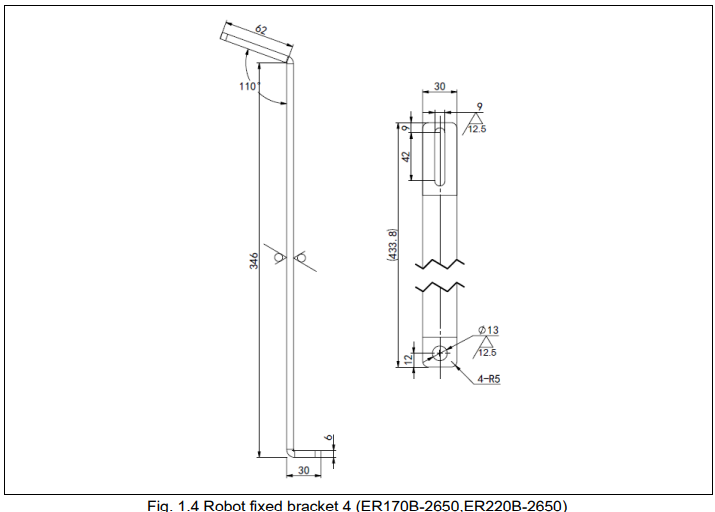
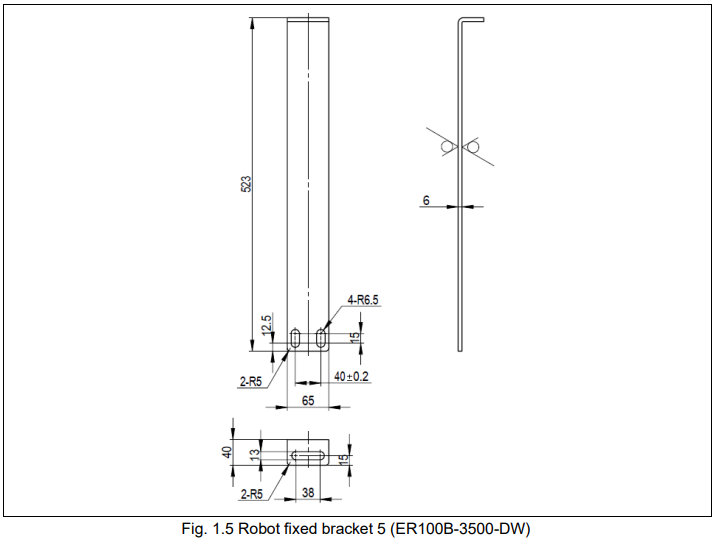
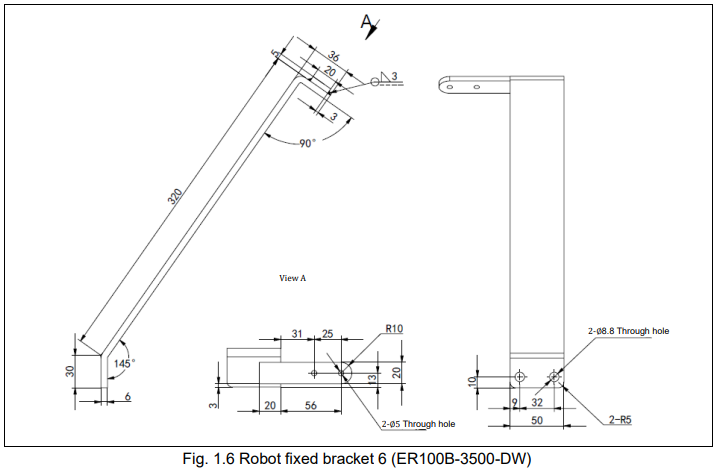
1.1.1.Transport by a forklift
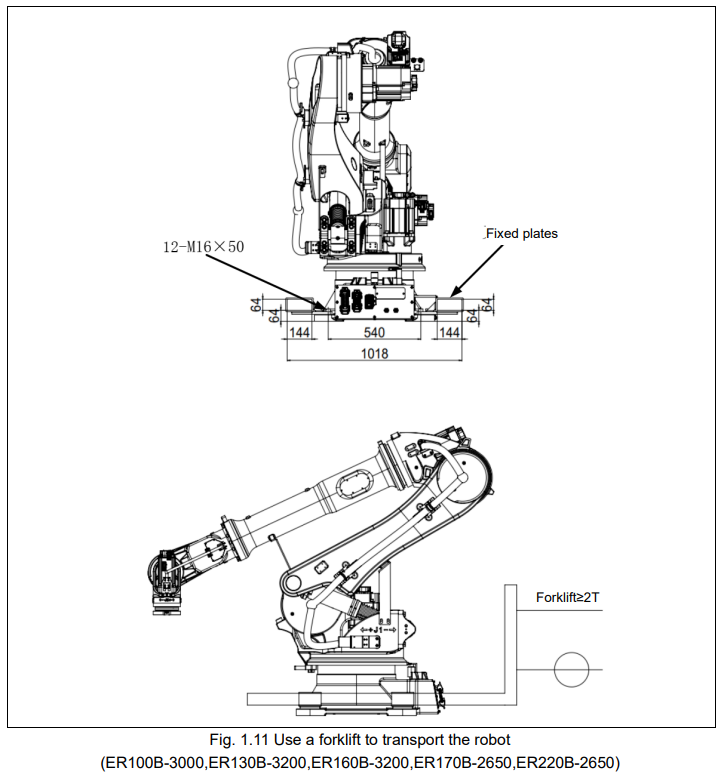
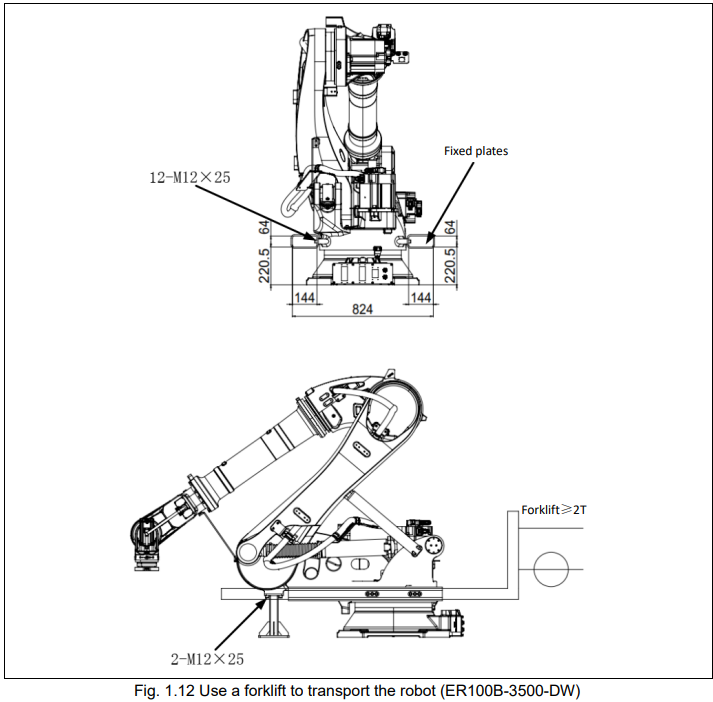
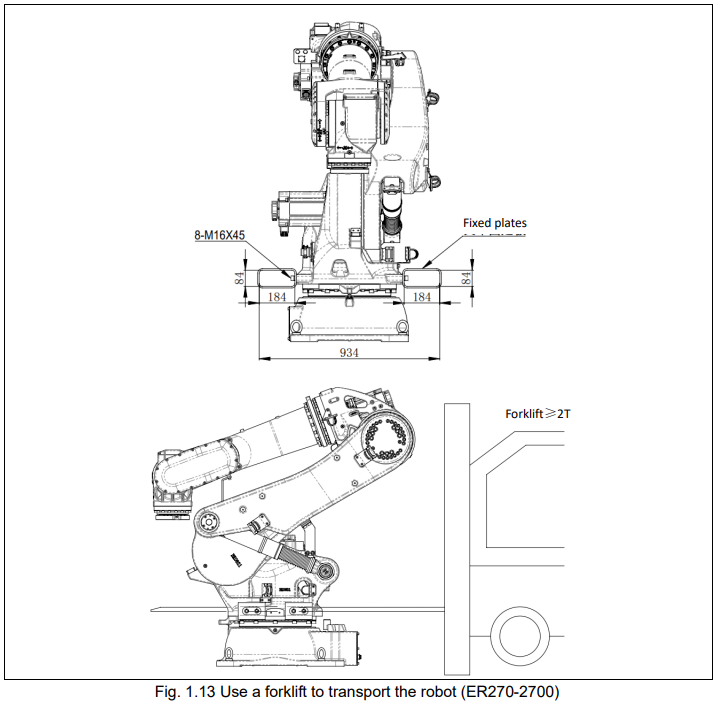
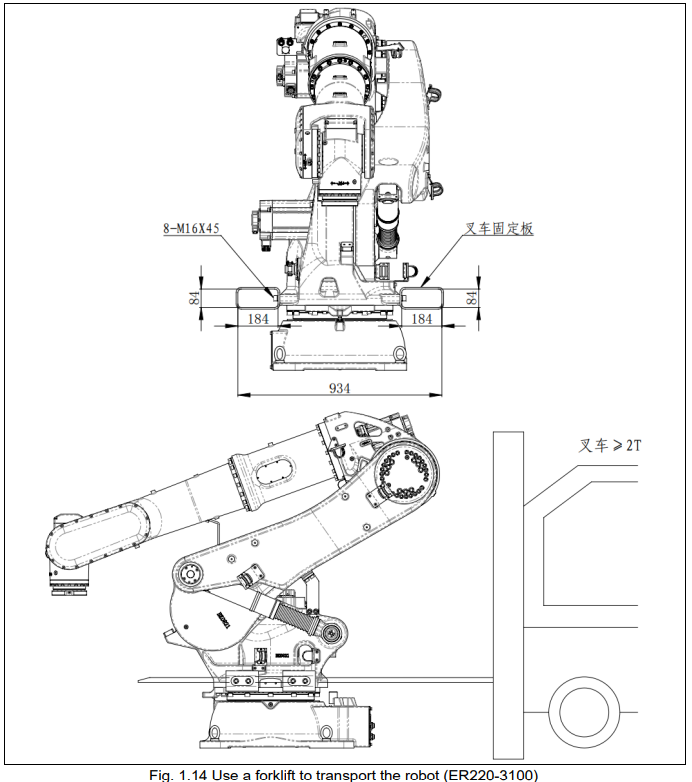
Use a forklift to transport the robot. As ER100B-3000、ER100B-3500-DW、ER130B-3200、 ER160B-3200,ER170B-2650 和 ER220B-2650,Use 12 M16X50 bolts to fix the 4 fixed plates on the forklift to the robot base. As ER270-2700 and ER220-3100 ,Use 8 M16X45 bolts to fix the 4 fixed plates on the forklift to the robot base a forklift to heave the robot. Make sure that the fixed bolts of the robot are removed before transportation.

1.1.1.1. Transport by a crane
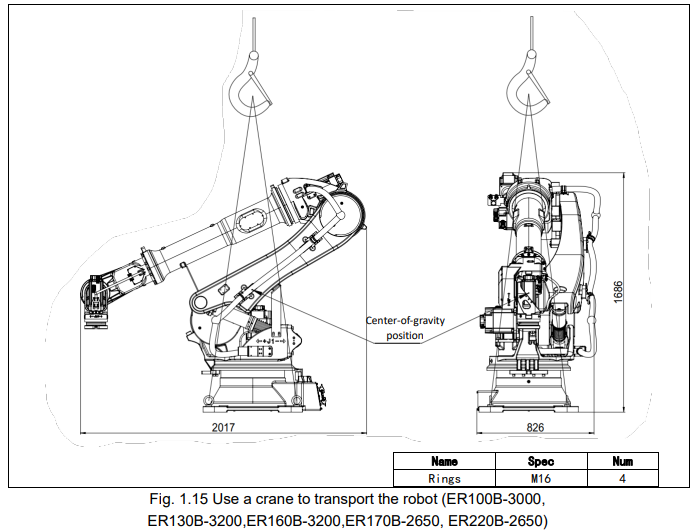
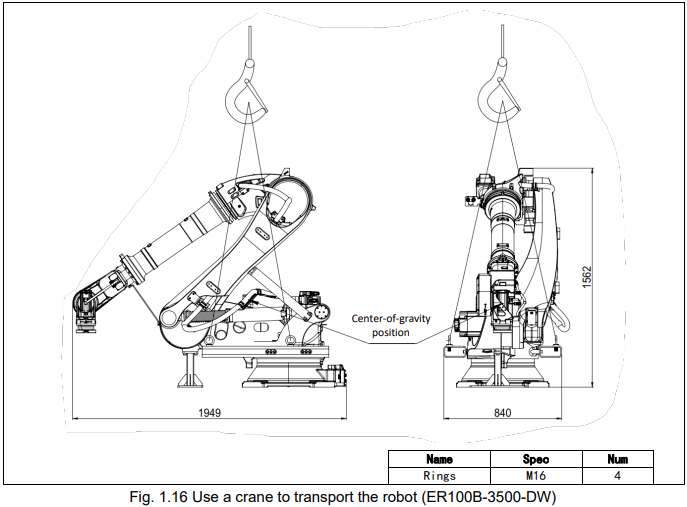
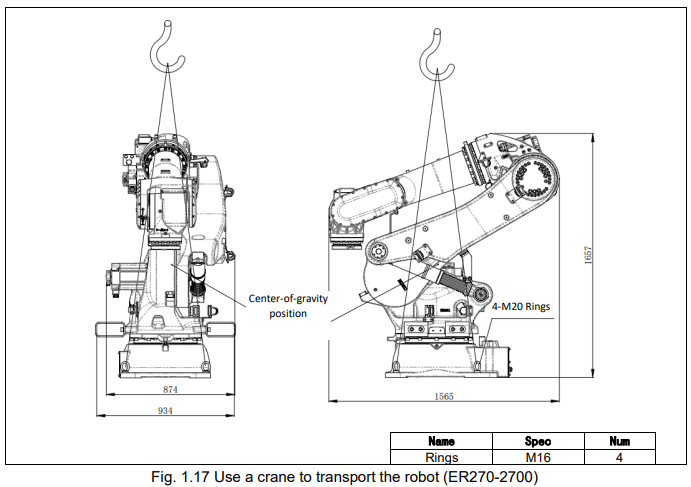
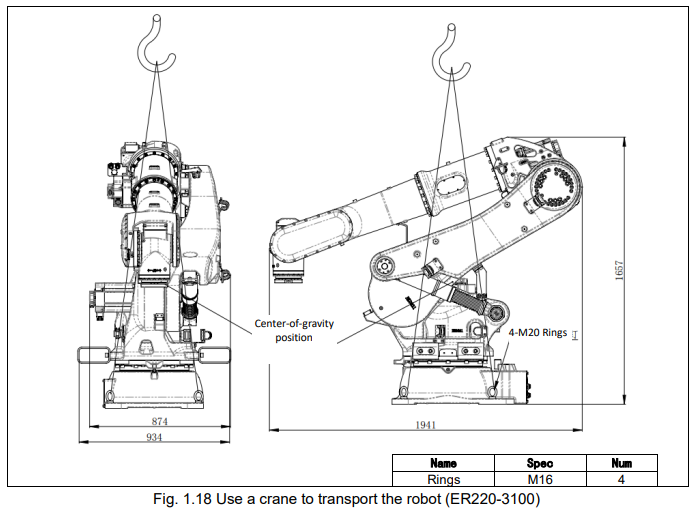
The robot described in this manual can be transported by a crane. Fix the M16 rings on the robot rotation base, use a crane and strings to heave the robot. Make sure that the strings are fixed as shown in the figure below. Take necessary measures to avoid paint peeling due to collision between the strings and the robot.

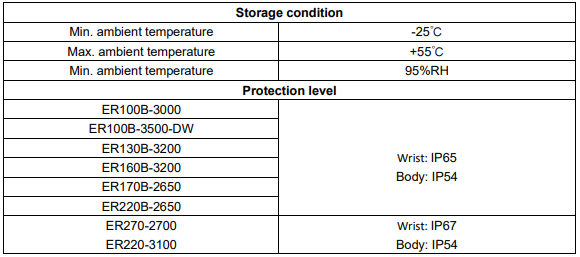
1.2. Storage
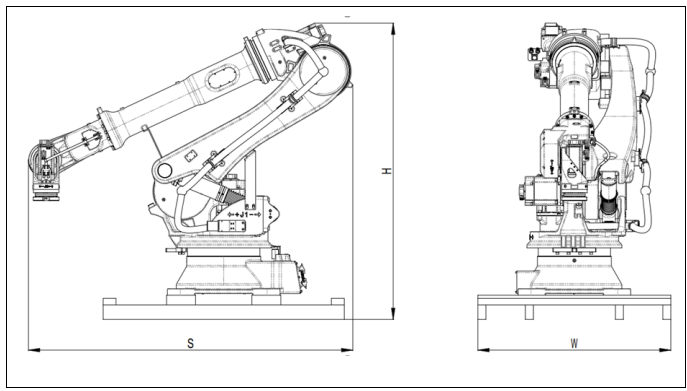
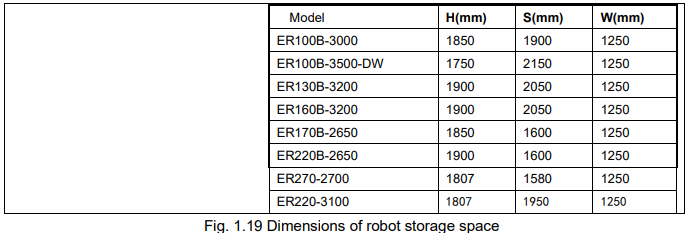
The storage requirements for this model of robot when transported on a wooden pallet are as follows:
1.3. INSTALLATION

The following precautions must be fully understood and observed before installing the robot.
Be sure to read and understand SAFETY chapter thoroughly.
ESTUN robots must be transported, mounted and operated by authorized person, and in accordance with the applicable national laws, regulations and standards.
Check the external damage of the robot package. Open the package and check the external damage of the robot.
Make sure the weight of the robot is within the forklift or crane load capacity. Details see Section 1.1 TRANSPORTATION.
Storage and mounting condition should be complied with Section 1.3 INSTALLATION CONDITION.
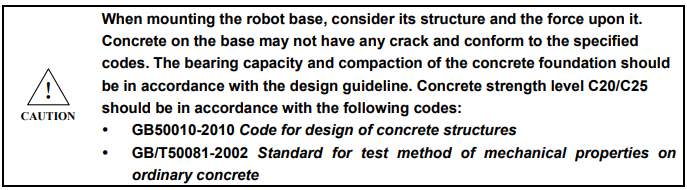
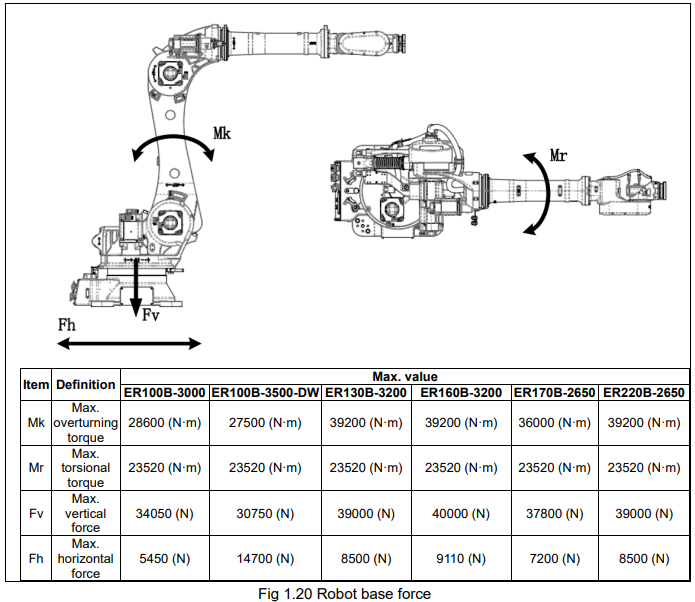
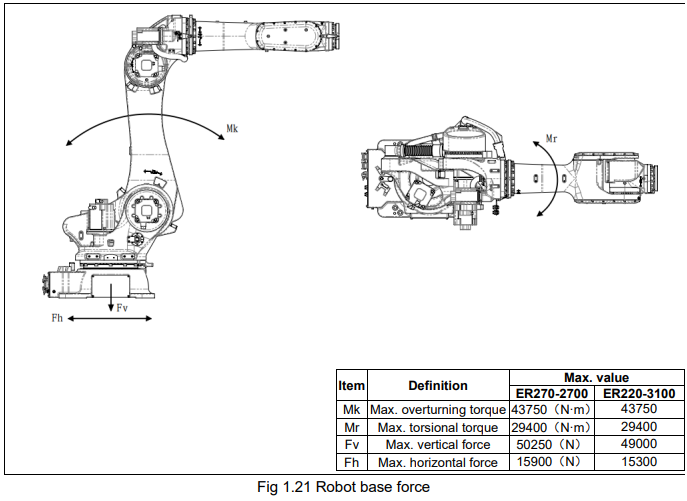
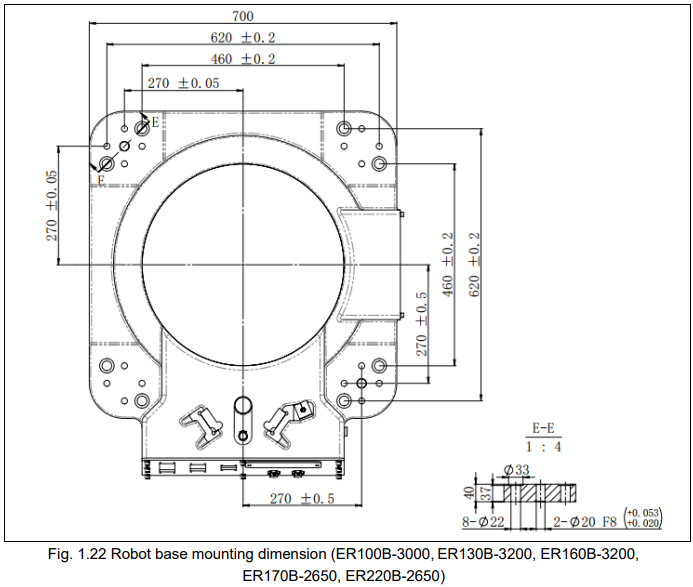
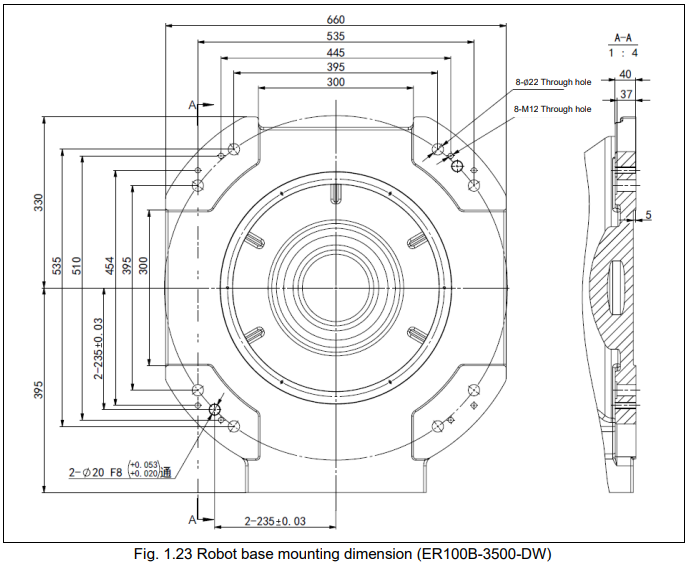
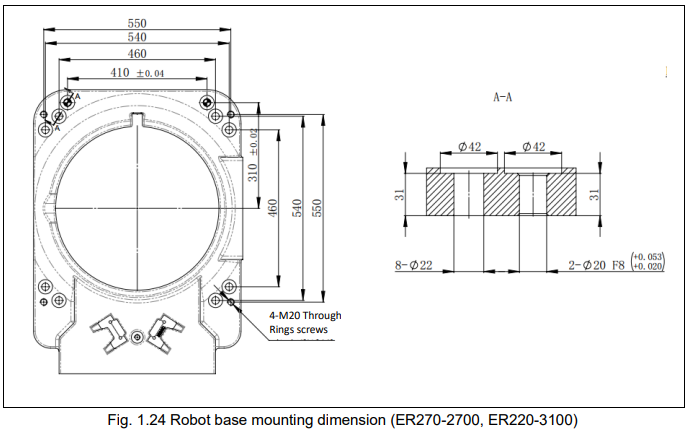


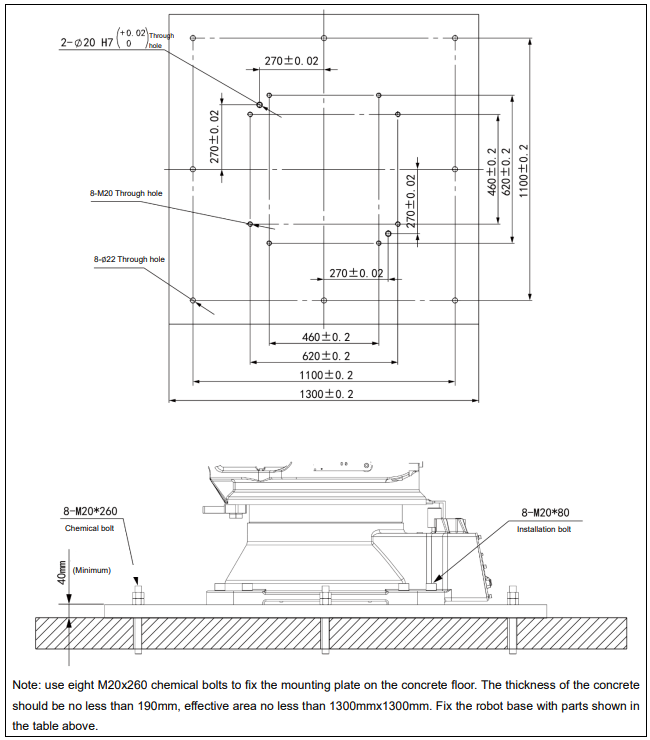
Fig. 1.25 Robot mounting plate dimension and mounting method (ER100B-3000, ER130B-3200,
ER160B-3200, ER170B-2650, ER220B-2650)
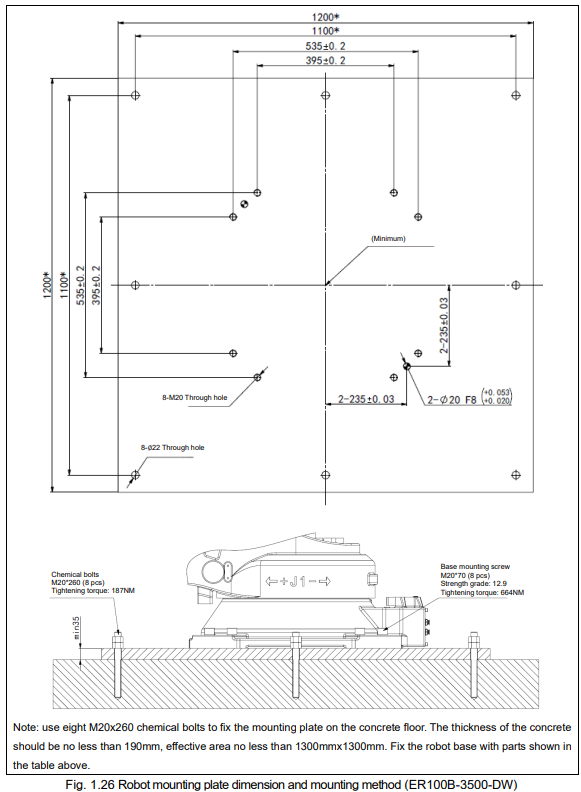
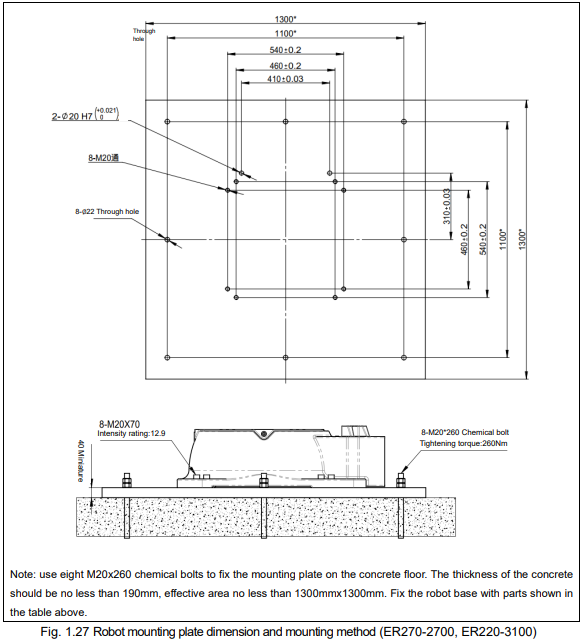
1.4. INSTALLATION CONDITIONS


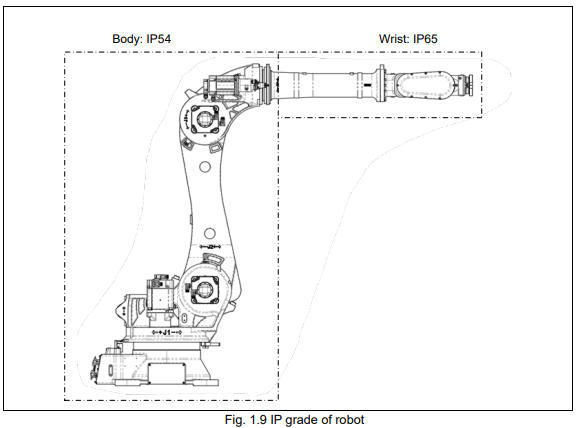
Performance of resistant chemicals and resistant solvents.
(1) The robot (including severe dust/liquid protection model) cannot be used with the following liquids.
Potentially these liquids will cause irreversible damage to the rubber parts (such as gaskets, oil seals, O-rings etc.). (As exception to this only liquids tested and approved by ESTUN can be used with the robot).
(a) Organic solvents
(b) Cutting fluid including chlorine/gasoline
(c) Amine type detergent
(d) Acid, alkali and liquid causing rust
(e) Other liquids or solutions that will harm NBR or CR rubber
(2) When the robots work in the environment, using water or liquid, complete draining of J1 base must be done. Incomplete draining of J1base will make the robot break down.
(3) Do not use unconfirmed liquid.
(4) Do not use the robot immersed in water, neither temporary nor permanent. Robot must not be wet permanently. Example: in case motor surface is exposed to water for a long time, liquid may invade inside the motor and cause failure.
No comments to display
No comments to display