
1.Transportation & Installation
1.1. Transportation

Before moving the robot, position each joint of the robot into the handling position to ensure that the robot remains in the handling position without any movement or displacement during transportation.
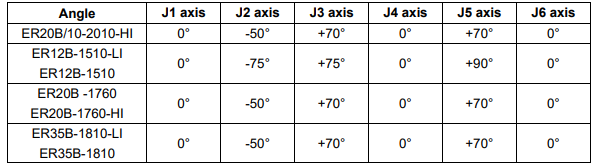
The robot should maintain the handling position until it is fully installed and secured. The angular rotation of each axis in the handling position is as follows, and it is crucial to handle the robot according to the specified angles in the table. Failure to do so may result in safety accidents or equipment malfunctions
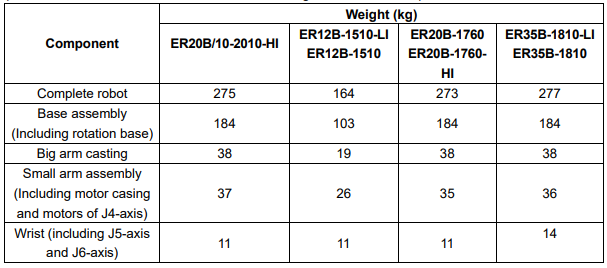
During the installation, disassembly, and transportation of the robot, the weight of the robot is a critical parameter. The table below lists the theoretical weight of the main components of the robot.

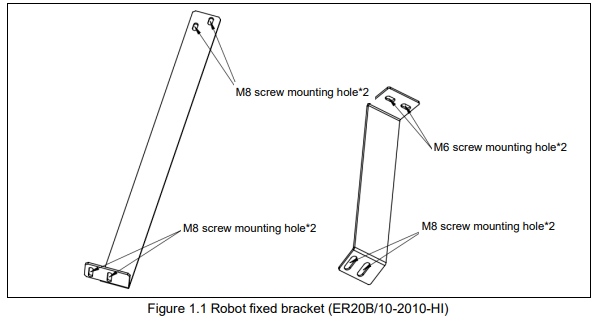
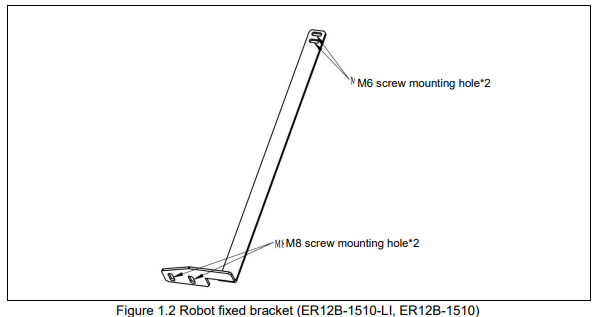
Fixed bracket should be mounted before transport the robot and be removed before install the robot. Refer to the following figures when remove the bolts on fixed bracket.
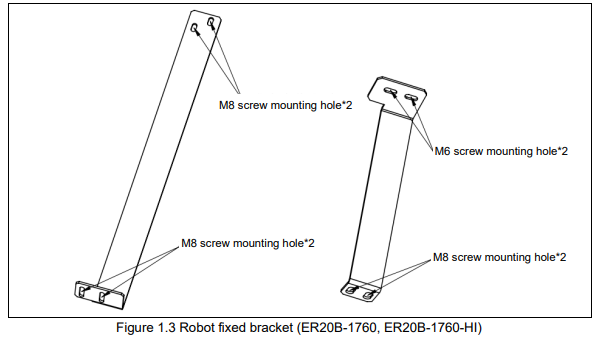
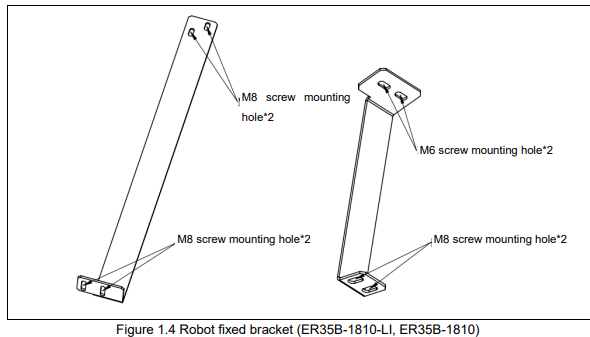
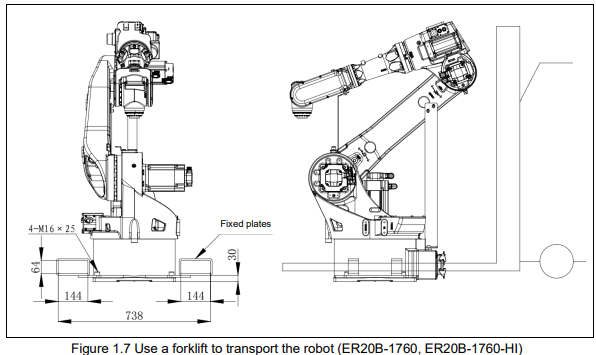
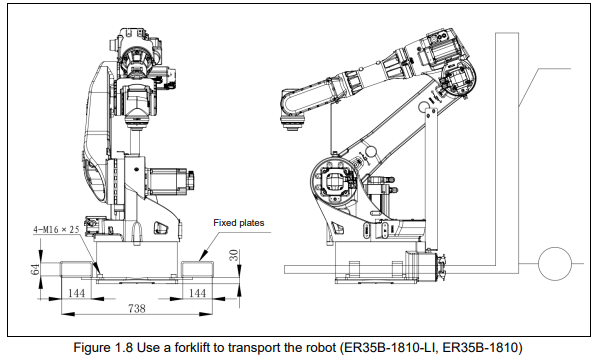
1.1.1.Transport by a forklift
The robot described in this manual can be transported by a forklift. Use eight bolts to fix the 4 fixed plates on the forklift to the robot base, use a forklift to heave the robot. Make sure that the fixed bolts of the robot are removed before transportation.
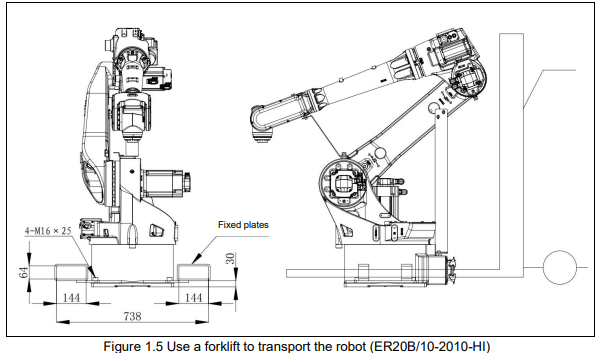
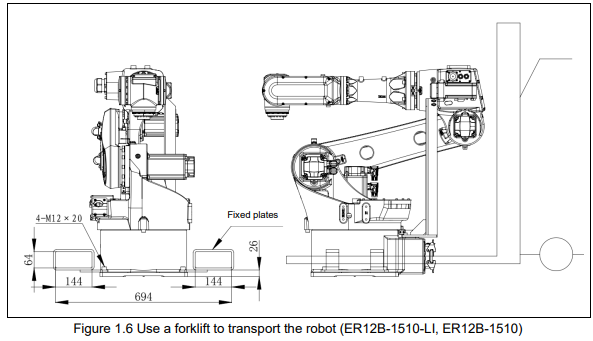

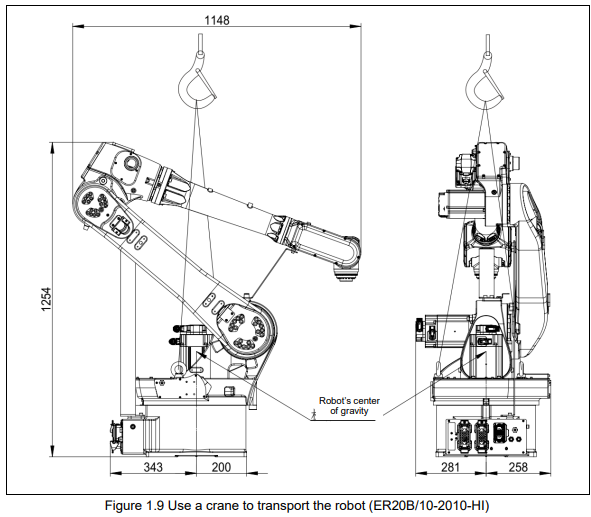
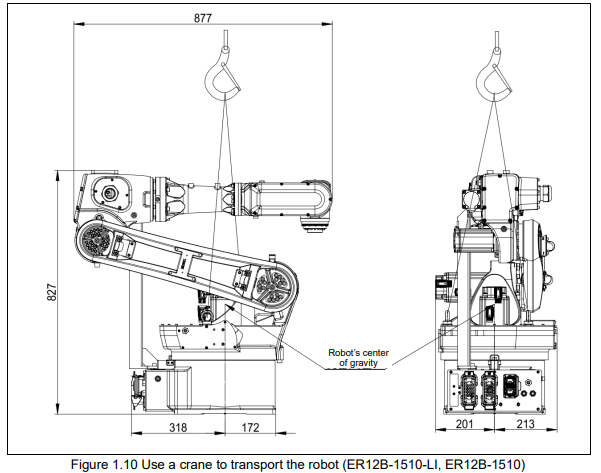
1.1.2.Transport by a crane
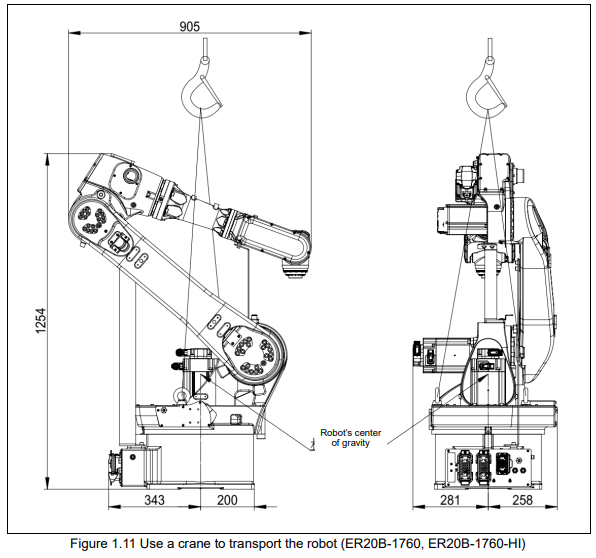
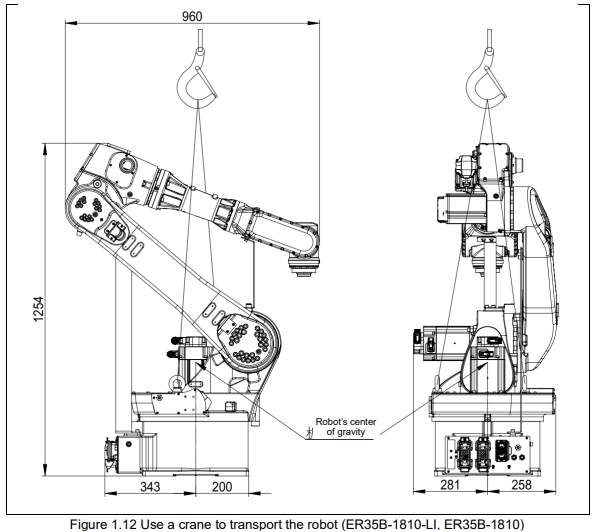
This series of robots can also be transported using a crane. Install lifting eye bolts on the robot's base and use slings to lift it. Please refer to the provided diagram to ensure that the slings are crossed during lifting. Take necessary precautions to protect the robot's surface where the slings come in contact to prevent any paint damage.

1.2. Installation

The following precautions must be fully understood and observed before installing the robot:
Be sure to read and understand SAFETY chapter thoroughly;
ESTUN robots must be transported, mounted and operated by authorized person, and in accordance with the applicable national laws, regulations and standards;
Check the external damage of the robot package. Open the package and check the external damage of the robot;
Make sure the weight of the robot is within the forklift or crane load capacity. Details see Section
1.1 TRANSPORTATION;
Storage and mounting condition should be complied with Section 1.3 INSTALLATION CONDITION.


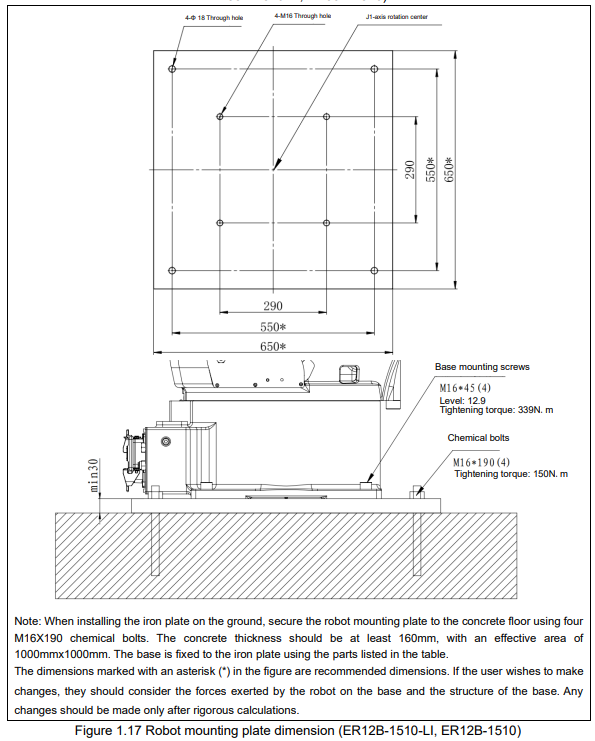
1.3. Installation conditions

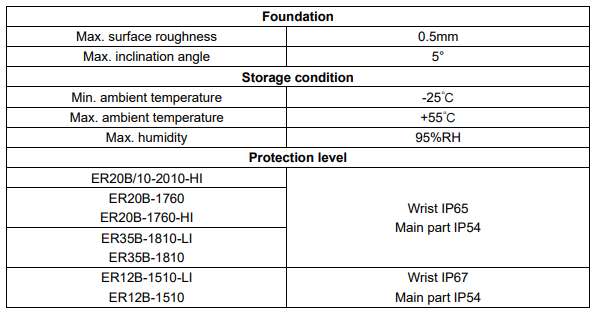
The robot body exhibits excellent resistance to chemicals and solvents, as described below:
(1) The following liquids may cause aging or corrosion of rubber components (seals, gaskets, O-rings, etc.) on the robot. Please refrain from using them, except for products approved by ESTUN.
(a)Organic solvents
(b)Cutting fluid including chlorine/gasoline
(c)Amine type detergent
(d)Acid, alkali and liquid causing rust
(e) Other liquids or aqueous solutions, such as nitrile rubber (NBR), lack resistance to them
(2) When using the robot in environments where liquids such as water may splash onto it, special attention should be given to the drainage of the base. Inadequate drainage that results in frequent water immersion of the base can cause robot malfunctions.
(3) Do not use cutting fluids or cleaning solutions with unclear properties.
(4) The robot should not be immersed in water for prolonged periods or used in environments prone to getting wet. For example, if the motor surface is exposed and remains wet for an extended period, liquid can infiltrate the motor and cause malfunctions.
No comments to display
No comments to display